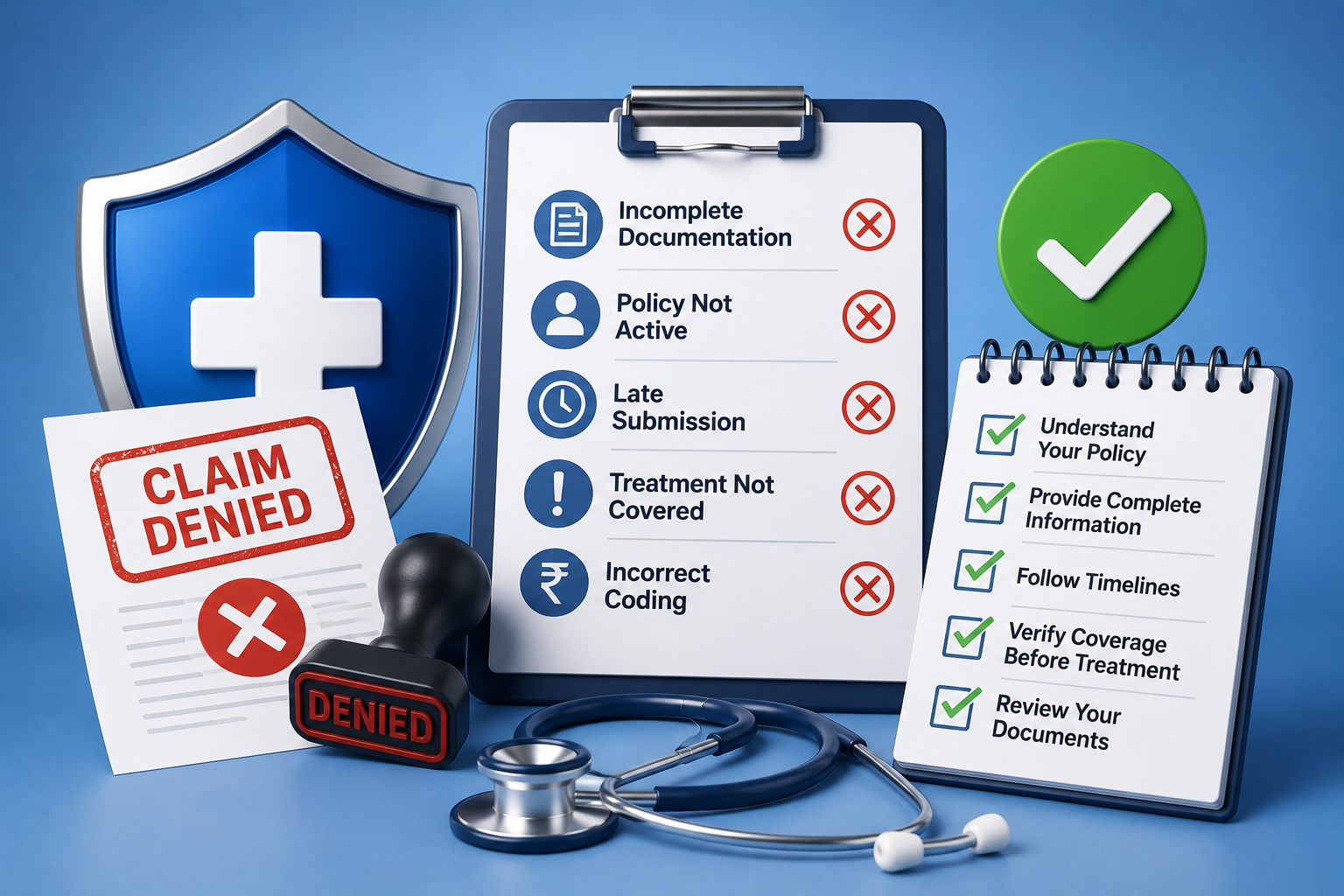
Receiving a medical bill is stressful enough, but finding out your health insurance company refused to pay for your care adds an entirely new layer of frustration. If it feels like health insurance claim denials are happening more frequently than ever, you are not imagining things.
A comprehensive national brief revealed that insurers deny an average of 19% of in-network claims filed through federal marketplace plans. That means nearly one out of every five doctor-recommended treatments, prescriptions, or diagnostics is initially rejected.
The financial and operational reality of this trend is causing significant friction across the United States. According to a consumer study, two-thirds of insured American adults explicitly classify insurance delays and claim rejections as a major problem in modern society.
The real problem lies in the fact that patients rarely push back. In fact, individual market enrollees pursue a formal appeal for fewer than 1% of denied claims, leaving families directly liable for unpaid medical balances.
To successfully navigate this environment and protect your household budget, you must understand exactly why insurers reject medical bills. This detailed guide breaks down the most common health insurance claim denials, current regulatory shifts, and a step-by-step framework to fight back and get your bills paid.
The Landscape: Who Denies the Most Claims?
Not all insurance carriers approach claims review with the same level of scrutiny. Payer rejection trends vary drastically based on the specific insurer, regional regulations, and the underlying structure of the health plan.
Data from the Centers for Medicare and Medicaid Services (CMS) highlights the wide variability among parent insurance organizations handling millions of annual claims.
This variation demonstrates that your risk of receiving a medical denial depends heavily on your choice of coverage provider. While top-tier premium structures can absorb high claim volumes, budget-tier providers and specific state marketplace networks often utilize strict administrative processing rules under the banner of cost containment to keep their operational ledgers balanced.
1. Missing or Incomplete Prior Authorization
One of the fastest-growing reasons for immediate medical bill rejections is the lack of a pre-approved prior authorization. Prior authorization requires your doctor to obtain formal permission from your insurance company before administering a specific drug, procedure, or diagnostic scan.
If your medical provider performs the service or dispenses the treatment before this formal green light is secured, the insurer will automatically reject the financial claim, regardless of whether the care was medically necessary.
The scope of services requiring this pre-approval has expanded dramatically. Insurance companies frequently expand their pre-authorization lists to cover routine care options, including basic imaging like MRIs, specialized physical therapy regimens, and common outpatient surgical procedures.
Public awareness surrounding this issue escalated following legislative focus, highlighting cases where severe delays in prior authorization approvals directly compromised patient care during critical oncological windows.
2. Technical and Administrative Processing Errors
A massive portion of health insurance rejections can be traced back to basic clerical mistakes made during the patient intake or billing phases. These are classified as administrative or technical errors, and they account for roughly 25% of all in-network marketplace claim denials across the country.
Common administrative mistakes include:
Simple Typographical Errors: A single misspelled letter in a patient’s name, an inverted digit in a policy identification number, or an incorrect date of birth can trip automated validation software.
Coordination of Benefits (COB) Mismatches: If a patient is covered under more than one policy (e.g., a personal employer plan and a spouse’s corporate plan), both insurers will frequently deny the claim until the policyholder submits a formal update defining which entity acts as the primary payer.
Outdated Insurance Selection: Submitting bills to an old insurer after a corporate benefit transition or policy lapse will trigger an immediate rejection.
To avoid these basic data mistakes, take control of your profile using the interactive diagnostic checklist below. This tool simulates how simple processing details impact claim approvals.
Interactive Medical Claim Intake Simulator
See how clerical omissions, minor typos, or coordination errors instantly impact whether an insurance company approves or rejects a medical bill.
Live Claims Processing Output
First-Pass Approval Probability
95%
Clean Claim Approved
Processing Status: Clean EntryAll primary baseline indicators align with registry frameworks. This bill passes automation validation rules clean without triggering review penalties.
3. Lack of Substantiated Medical Necessity
When an insurance company rejects a claim based on a lack of medical necessity, it means the insurer's internal medical review team or automated algorithm disagrees with your treating physician's clinical judgment. The insurer determines that the procedure or medication requested is either too expensive, overly aggressive, or not supported by their specific internal coverage criteria.
Medical Setting
Primary Denial Trigger
Real-World Impact
Inpatient Hospital Stays
Length of stay extension beyond standard diagnostic windows.
Observation status changes that shift cost burdens directly to the patient.
Specialty Pharmacy
Requesting brand-name medications before trying cheaper step-therapy alternatives.
Automatic prescription rejections at the pharmacy point-of-sale window.
Advanced Diagnostics
Ordering high-tier scans (PET/CT) without first executing baseline X-rays.
Full procedural bill balances routed to the patient's out-of-pocket ledger.
This issue is further complicated by the deployment of artificial intelligence tools by major carriers to review and deny charts in batches. This practice has drawn scrutiny from healthcare advocacy groups and state regulators.
In response, states like California and Montana have pursued penalties and increased oversight against health plans that repeatedly rely on automated algorithms to issue systematic medical necessity denials.
4. Services Not Covered under Policy Frameworks
A claim will be rejected immediately if you receive care for a medical service that is completely excluded from your insurance policy's certificate of coverage. This most frequently occurs with elective cosmetic surgeries, alternative medicine treatments like acupuncture, or fertility therapies that lack explicit benefit riders.
Furthermore, out-of-network care remains a persistent source of surprise bills. While in-network marketplace claims face a 19% denial average, out-of-network service claims hit a 37% rejection rate.
The federal No Surprises Act offers protection during emergency room scenarios, but if you voluntarily visit an out-of-network specialist or facility for elective care, your insurer can legally refuse to pay the bill or apply the costs toward your annual out-of-pocket maximum.
How to Overturn a Health Insurance Claim Denial
If you receive an Explanation of Benefits (EOB) stating that a claim was denied, do not panic. Landmark medical studies published in journals like JAMA reveal that claim overturn rates upon formal appeal increased significantly, jumping to nearly 53%.
In certain sectors like Medicare Advantage and specialized home healthcare, more than 78% of denials are successfully overturned once an appeal is filed.
Follow this structured sequence to appeal an insurance rejection and secure your coverage.
1.Decipher the Explanation of Benefits (EOB) Error Code
Locate the physical or digital copy of your EOB. Look closely at the alphanumeric denial code (e.g., CO-16, CO-50) and its accompanying description. This tells you exactly why the claim failed, distinguishing between an administrative data error and a complex medical necessity dispute.
2.Audit the Clinic's Billing Manifest and CMS-1500 Form
Contact your medical provider's billing office. Ask them to verify that your name, policy group number, and diagnostic ICD-10 coding strings match your insurance card perfectly. If they discover a typo, ask the coder to correct the entry and resubmit the claim immediately as a corrected claim.
3.Initiate a Formal Internal Appeal Review
If the denial stems from a medical necessity dispute, request an internal appeal package from your insurer. Work with your doctor to draft a medical justification letter. This package must include your complete clinical chart notes, relevant peer-reviewed medical studies, and a clear explanation of why alternative treatments are ineffective.
4.Escalate to an Independent External Review Board
If your insurance company upholds their denial after the internal appeal, request an external review. This shifts your case to an independent, third-party medical professional who has no financial ties to your insurance company. By federal law, if the external reviewer determines the care is medically necessary, your insurance company must cover the service.
Key Strategies to Prevent Future Denials
While knowing how to appeal is valuable, preventing claim denials from happening in the first place is the most effective way to secure your financial health. Keep these strategies in mind before your next medical appointment:
Always Verify Network Tier Placement: Confirm that both the primary facility and the individual rendering physician are fully participating in your plan's specific network tier.
Keep Your Coordination of Benefits Updated: Call your insurer once a year to confirm your primary and secondary insurance status, even if your coverage situation has not changed.
Track Prior Authorizations Verbally: Never assume your doctor's office completed the pre-approval paperwork. Call your insurance company three days before a major procedure to verify that the prior authorization is active in their system.
Document Everything: Maintain a dedicated notebook for all insurance interactions. Record the date, time, full name, and employee identification number of every representative you speak with, along with a summary of the guidance they provided.
Navigating insurance company bureaucracy requires persistence, but half the battle is simply entering the fight. By staying informed and monitoring your billing data, you can significantly reduce your risk of unexpected rejections and ensure you receive the coverage you pay for.