Updated June 2026 · Home Insurance Guide · 15 min read
A complete, plain-English breakdown of when your homeowners policy pays for water damage, when it does not, why flood damage is always separate, and what 2026 NFIP and claims data means for your coverage decisions this year.
Quick Summary
Homeowners insurance generally covers water damage that is sudden and accidental, such as a burst pipe, a failed water heater, or an overflowing appliance.
Standard policies do not cover flood damage from outside the home, including storm surge, rising rivers, or heavy rainfall pooling against your foundation. That requires a separate flood policy.
Sewer and drain backups are also excluded by default and require a separate water backup endorsement, typically costing $50 to $250 a year.
Water damage and freezing claims made up roughly a quarter of all homeowners insurance claims in recent years, second only to wind and hail.
The National Flood Insurance Program’s authority to issue new policies is currently set to expire on September 30, 2026, unless Congress passes another reauthorization, a deadline that directly affects flood coverage availability for millions of homeowners.
Just one inch of floodwater can cause an estimated $25,000 in damage to a home, according to FEMA, far more than most homeowners expect.
Roughly a third of NFIP claims come from properties outside officially designated high-risk flood zones, meaning low-risk does not mean no-risk.
1. Water Damage vs. Flood Damage: The Critical Difference
Insurance companies draw a hard line between two terms that most homeowners use interchangeably: water damage and flood damage. That distinction determines whether your claim gets paid or denied.
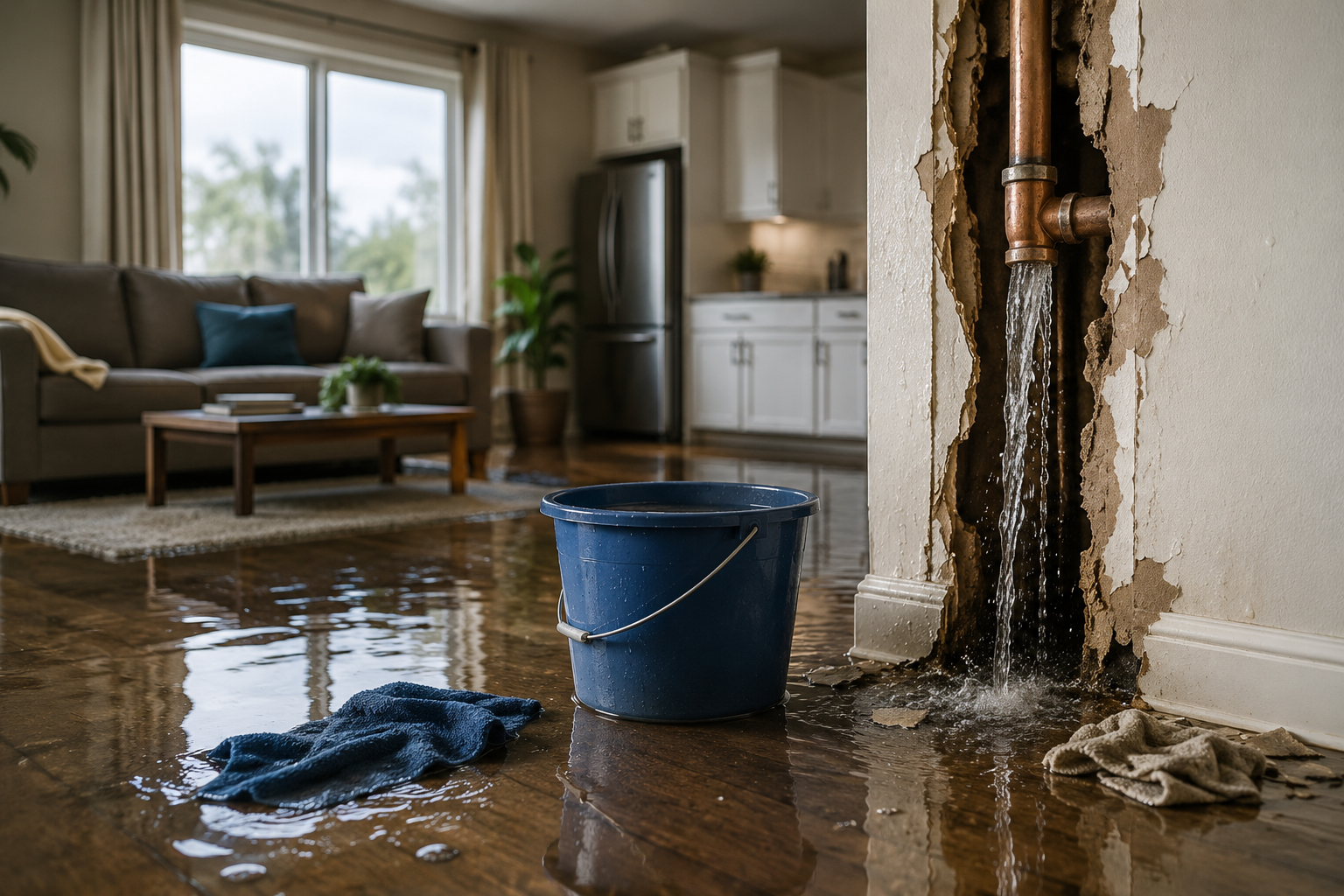
Water damage generally refers to a sudden, accidental water event originating inside your home, such as a burst pipe, a failed appliance hose, or an overflowing bathtub. This is typically covered by a standard homeowners policy.
Flood damage refers to water that rises from outside the home and affects two or more properties or acres, such as storm surge, an overflowing river, or rainwater pooling on the ground and entering through the foundation. This is excluded from every standard homeowners policy in the country and requires a separate flood insurance policy.
This single distinction is the source of more denied claims and homeowner frustration than almost any other issue in residential insurance. A homeowner whose basement floods during a hurricane because the storm surge rose through their foundation walls will likely have that claim denied under their standard homeowners policy, while a homeowner whose pipe bursts during a cold snap and floods the same basement will likely be covered.
2. What Water Damage Is Covered by Homeowners Insurance
A standard homeowners policy responds to water damage through three coverage components: dwelling coverage (the structure itself), personal property coverage (your belongings), and sometimes liability coverage (if someone else’s property is damaged). Coverage generally applies when the cause is sudden, accidental, and internal to the home.
Commonly covered scenarios
Burst or frozen pipes that rupture suddenly, soaking floors, walls, and ceilings.
Water heater failure, when a tank ruptures or a fitting fails without warning.
Appliance malfunctions, such as a washing machine hose that bursts or a dishwasher that suddenly leaks.
Accidental overflow from a bathtub, sink, or toilet.
Storm-driven rain damage, such as rain entering through a window or roof that was suddenly broken by wind or hail during the same storm.
Roof leaks from a covered peril, such as a tree limb crashing through the roof during a storm, as opposed to a roof that leaks due to age and lack of maintenance.
Fire department water damage, when firefighting efforts to control a covered fire result in water damage to the structure.
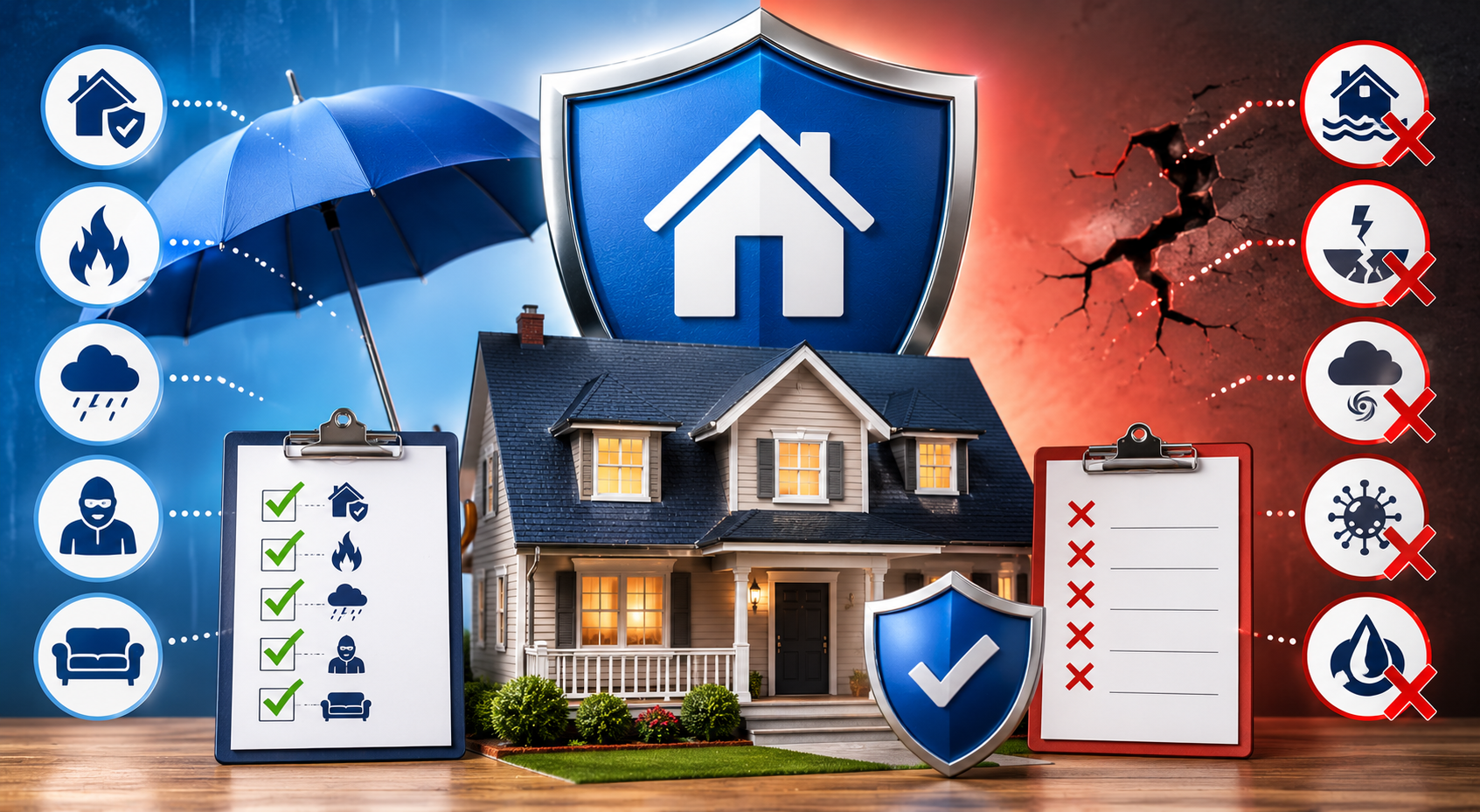
Typically Covered
Pipe bursts suddenly during a freeze
Washing machine hose blows out
Storm breaks a window and rain gets in
Water heater tank ruptures without warning
Tree falls through roof during a storm
Typically Not Covered
River or storm surge flooding
Sewer backup with no add-on endorsement
Slow leak ignored for months, causing rot
Roof leaking due to age and poor upkeep
Sump pump failure with no add-on endorsement
3. What Water Damage Is Not Covered
Insurers exclude water damage in situations they consider preventable through ordinary maintenance, or in situations involving forces of nature that are handled by a different type of policy entirely. The most common exclusions are:
Flooding from heavy rain, storm surge, or rising bodies of water; always excluded from standard policies.
Sewer or drain backups, unless you’ve purchased the water backup endorsement.
Sump pump failure or overflow, unless covered by the same endorsement.
Gradual leaks and seepage that occur over weeks or months, since insurers view this as a maintenance failure rather than a sudden event.
Wear and tear or neglect, such as a slowly rotting roof or corroded plumbing that was never repaired.
The cost of fixing the source itself; for example, if a washing machine causes water damage, your policy may pay to repair the floor it damaged, but not to replace the washing machine.
Mold resulting from unaddressed moisture, in many states and policies, particularly when the underlying leak went unrepaired for an extended period.
Adjuster’s perspective: Claims adjusters are specifically trained to distinguish between sudden damage and gradual damage. Water stains with multiple discoloration rings, soft or rotted wood, and visible past patch attempts are all signs of a long-term leak, and these details can lead to a denied claim even if the homeowner genuinely didn’t notice the problem.
4. Why Flooding Is Always a Separate Policy
Flood risk is excluded from standard homeowners insurance for a structural reason in how the insurance industry is built. Floods tend to affect entire neighborhoods or regions simultaneously, which makes the risk difficult for a single private insurer to absorb the way they absorb scattered, individual losses like a single burst pipe. Because of this, flood insurance in the United States is primarily handled through a federal program.
The National Flood Insurance Program, created in 1968 and administered by FEMA, exists specifically to fill this gap. As of the end of 2025, the NFIP had over 4.5 million active policies in force, providing more than 1.3 trillion dollars in total coverage nationwide. Standard NFIP policies cap building coverage at 250,000 dollars and contents coverage at 100,000 dollars, limits that frequently fall short for higher-value homes, which is why many homeowners in flood-prone states also purchase excess or private flood coverage on top of their NFIP policy.
5. 2026 News: The NFIP Deadline Every Homeowner Should Know
2026 News Update: According to a 2026 Congressional Research Service report, the NFIP’s authority to issue new flood insurance contracts is set to expire on September 30, 2026, unless Congress passes another extension. The program has already been kept alive through 35 short-term reauthorizations since the end of fiscal year 2017, with the last full long-term reauthorization dating back to 2012. If the authorization lapses again, new flood policies cannot be issued and renewals can stall in the affected window, which has happened multiple times in past years during legislative gridlock.
This matters to far more homeowners than most people assume. Flood damage is not a coastal-only risk. According to FEMA data, roughly 99 percent of U.S. counties have experienced a flood event since 1996, and more than a third of NFIP claims come from properties located outside officially designated high-risk flood zones. In practical terms, a homeowner in a moderate-risk or even low-risk zone, who assumes flooding “doesn’t happen here,” is statistically more exposed than they realize.
The financial scale involved is significant. Direct property damage from flooding in the United States totaled close to 144 billion dollars between 2010 and 2023, while NFIP insurance payments covered only around 50 billion dollars of that total, or about 35 percent, according to a Federal Reserve flood risk analysis. The gap between actual flood losses and insured flood losses remains one of the largest protection shortfalls in American homeownership.
6. Sewer and Sump Pump Backup Coverage Explained
Sewer backup is one of the most commonly misunderstood exclusions in homeowners insurance. Many people assume that because the water enters their home accidentally, it must be covered. It is not, unless a specific endorsement has been added.
What triggers a sewer or water backup
Tree roots infiltrating and cracking underground sewer lines
Municipal sewer system overload during heavy rainfall
A failed or undersized sump pump during a storm
Clogged or collapsed drain pipes backing water into the home
What the endorsement typically covers
A water backup and sump pump overflow endorsement, sometimes simply called a sewer backup endorsement, can be added to most homeowners policies for a relatively small premium increase. It generally pays for:
Structural repairs to floors, walls, and finished basements
Damaged personal property such as furniture and flooring
Water extraction and cleanup costs
Mold remediation directly caused by the backup, in many policies
Feature
Typical Range
Annual endorsement cost
$50 to $250 per year
Coverage limit available
$5,000 to $25,000 (some insurers offer higher limits)
Separate deductible
Often $250 to $1,000, may differ from your main deductible
Given that even a modest sewer backup event can cause several thousand dollars in damage, and severe cases involving contaminated water and structural drying can exceed 16,000 dollars, this endorsement is widely viewed by agents as one of the better value additions available on a standard policy.
7. How Much Water Damage Actually Costs
Water damage repair costs vary enormously depending on the source of the water, how long it sat before being addressed, and whether the water was clean, contaminated, or sewage-based. Restoration professionals typically categorize jobs by severity.
Damage Type
Typical Cost Range
Minor leak, caught quickly
$500 – $2,500
Average water damage restoration project
~$3,860 (national average)
Severe case with black water or mold growth
$10,000 – $16,000+
One inch of floodwater in a 2,500 sq ft home
~$26,800 (FEMA estimate)
Average NFIP flood claim payout (2016-2022)
~$66,000
The gap between a routine covered leak and an uncovered flood event is enormous, which is exactly why understanding the water damage versus flood damage distinction from Section 1 has such a direct financial impact on homeowners.
8. Water Damage Claims by the Numbers
Water damage and freezing claims have consistently ranked among the top two or three most common categories of homeowners insurance claims nationwide, trailing only wind and hail in most recent years.
Roughly 1 in 67 insured homes files a water damage or freezing claim each year, according to industry data spanning 2019 to 2023.
Water damage and freezing claims peaked at 27.6 percent of all homeowners claims in 2022, before easing slightly to 22.6 percent in 2023.
An estimated 98 percent of basements will experience some form of water intrusion at some point during the life of the home.
Water damage cost the average affected homeowner roughly 13,954 dollars between 2018 and 2022, according to Insurance Information Institute estimates.
Across the entire industry, water damage claims cost insurers an estimated 13 billion dollars annually.
9. How to File a Water Damage Claim
Stop the source if it is safe to do so. Shut off the water supply valve or main water line to prevent further damage.
Turn off electricity in affected areas if water is near outlets, panels, or wiring, and only if it is safe to access the breaker.
Document everything immediately. Photograph and video the damage before any cleanup begins, including standing water levels and damaged belongings.
Begin drying within 24 to 48 hours. The EPA recommends this window specifically to limit mold growth, which can complicate or reduce a claim payout if left unaddressed.
Call your insurer promptly. Most policies require notice “as soon as reasonably possible,” and delays can be used to challenge a claim later.
Keep all receipts. Emergency mitigation costs, temporary repairs, and even hotel stays during major repairs are sometimes reimbursable.
Meet with the adjuster. Be prepared to explain the timeline of events clearly, since the cause and speed of the event determine coverage.
Get an independent repair estimate if the insurer’s offer seems low, since public adjusters and contractors can sometimes identify damage the initial inspection missed.
10. Will a Water Damage Claim Raise Your Premium
Water damage claims are among the claim types most likely to affect future premiums, specifically because insurers view repeated water losses as a sign of an ongoing maintenance or structural issue rather than a one-time accident. A single, clearly sudden event like one frozen pipe bursting during an unusually cold week is less likely to trigger a steep increase than a second or third water-related claim within a short period.
Some insurers also use a specialized claims history database, similar to a credit report for insurance claims, when underwriting a new policy or renewal. A property with a history of multiple water damage claims can see higher premiums, a higher required deductible specifically for water-related events, or in some cases a non-renewal notice at the policy’s next term, particularly in states with looser regulatory restrictions on non-renewal.
11. How to Protect Your Home From Water Damage
Install a water leak detection system. Smart sensors placed near water heaters, washing machines, and under sinks can alert you to a leak within minutes rather than days.
Insulate exposed pipes. Pipes in unheated areas like garages, crawl spaces, and exterior walls are the most common freeze-and-burst risk during cold snaps.
Maintain your roof. Replace missing shingles and check flashing regularly, since a slow roof leak from neglect is one of the most commonly denied claim types.
Clean gutters and downspouts twice a year. Clogged gutters direct water toward the foundation rather than away from it.
Test your sump pump annually, and consider a battery backup so it keeps running during a power outage in a storm.
Replace appliance hoses every 5 to 10 years. Washing machine and dishwasher hoses are a leading cause of sudden water damage claims.
Know your flood zone. Check FEMA’s flood map service for your address, and remember that a third of flood claims come from outside high-risk zones.
Review your policy annually. Confirm whether you have water backup coverage and whether your flood policy, if you have one, has kept pace with your home’s rebuild cost.
12. Frequently Asked Questions
Does homeowners insurance cover a basement flood?
It depends entirely on the source. A basement flood from a burst pipe is typically covered under a standard policy. A basement flood from rising groundwater, heavy rain pooling outside, or a sewer backup is typically excluded unless you have flood insurance or a water backup endorsement.
Is mold covered by homeowners insurance?
Mold caused directly by a sudden, covered water event is often covered, at least up to a stated policy limit. Mold resulting from a long-term, unaddressed leak is typically excluded, since insurers consider it a maintenance failure.
Do I need flood insurance if I do not live in a flood zone?
Many homeowners outside designated high-risk zones still choose to carry flood insurance, since roughly a third of NFIP claims historically come from properties outside those zones. Risk is regional and depends heavily on local drainage, elevation, and nearby waterways.
What is the difference between water backup coverage and flood insurance?
Water backup coverage addresses water that backs up into your home through drains, sewers, or a failed sump pump. Flood insurance addresses water that enters from outside the home due to rising water on the ground. They are two separate coverages addressing two separate causes.
Will my insurer cover the cost of finding a hidden leak?
Many policies include limited coverage for “tearing out” walls or flooring to locate a hidden leak, but this typically applies only when the leak itself is a covered, sudden event rather than a long-term gradual issue.
Can I still get flood insurance if the NFIP is not reauthorized in time?
During past lapses in NFIP authorization, new policies and some renewals were paused until Congress acted again. Existing claims and active policies were generally still administered, but the ability to purchase new coverage was affected. Homeowners in flood-prone areas are generally advised to secure or renew flood coverage well ahead of any known authorization deadline.
This article is for general educational purposes and does not constitute insurance, legal, or financial advice. Coverage details, exclusions, and endorsement availability vary by insurer and state. Always review your specific policy documents or speak with a licensed insurance agent for advice tailored to your situation.