For most individuals, a home is the largest financial investment they will ever make. Protecting that investment requires a comprehensive property insurance strategy. Yet, a significant portion of property owners do not fully understand the exact terms of their coverage.
The insurance industry is navigating an unprecedented paradigm shift. Driven by macroeconomic inflation and escalating climate risks, understanding the mechanics of your policy is no longer just smart financial planning; it is a critical requirement for wealth preservation.
This guide details the core components of homeowners insurance, outlines major gaps in standard policies, and examines how modern real estate and climate trends alter the risk landscape.
The Core Components of Homeowners Insurance
A standard homeowners insurance policy, historically referred to as an HO-3 policy in many regions, is not a singular blanket of protection. It is a package of distinct coverage types bundled together to safeguard your assets, personal property, and legal liability.
1. Dwelling Coverage (Coverage A)
Dwelling coverage pays to repair or rebuild the physical structure of your home if it is damaged by a covered peril, such as fire, lightning, windstorms, or hail. This includes everything attached to your house, such as your roof, walls, built-in cabinetry, and integrated electrical or plumbing systems.
2. Other Structures (Coverage B)
This segment protects unattached structures on your property lot. Examples include detached garages, fences, tool sheds, gazebos, and guest houses. Typically, the coverage limit for other structures is set automatically at 10% of your total dwelling coverage limit, though this can be increased via policy endorsements.
3. Personal Property (Coverage C)
Personal property coverage insures your personal belongings, including furniture, electronics, clothing, and appliances. This protection applies even when you are away from home, such as if your laptop is stolen from your vehicle while traveling.
Standard policies generally limit personal property payouts to 50% or 70% of the dwelling limit. High-value items like jewelry, fine art, and firearms are subject to strict sub-limits, often capping payouts at $1,500 to $2,500 per category unless scheduled separately.
4. Loss of Use / Additional Living Expenses (Coverage D)
If a covered disaster renders your home uninhabitable, Loss of Use coverage offsets the resulting financial strain. It pays for necessary increases in living expenses so your family can maintain its normal standard of living. Covered costs include hotel bills, temporary apartment rentals, restaurant meals, and moving storage fees while your home is being rebuilt.
5. Personal Liability (Coverage E)
Liability insurance protects your financial assets if someone files a lawsuit or makes a claim against you for bodily injury or property damage occurring on your premises. For example, if a guest slips on an icy walkway or your dog bites a neighbor, this coverage funds your legal defense team and covers court-ordered settlements up to your policy limit.
6. Medical Payments to Others (Coverage F)
This coverage pays for minor medical bills for guests injured on your property, regardless of who was at fault. It is intended to handle small incidents quickly, such as a minor burn or minor cut requiring stitches, preventing them from escalating into larger liability lawsuits.
Home Insurance Coverage & Premium Estimator
Estimate your target replacement costs, discover recommended sub-limits, and evaluate how regional climate factors impact your annual insurance premiums.
1. Property & Risk Variables
Matches your base pricing matrix to real-world regional hazard data.
The actual cost to rebuild the structure with local labor, not the real estate market value.
Mitigation features like impact roofs or cleared brush that trigger carrier discounts.
Your out-of-pocket cost per claim. Higher deductibles reduce your annual premium.
2. Policy Allocation & Cost Profile
Estimated Annual Premium
$0 / yr
Standard Package Policy Sub-Limits
[Cov A] Dwelling Structure:
$0
[Cov B] Other Structures (10%):
$0
[Cov C] Personal Property (50%):
$0
[Cov D] Loss of Use (20%):
$0
Underwriting Risk Evaluation
Analyzing satellite property metrics…
Perils: Open Perils vs. Named Perils
Insurance companies evaluate property claims based on how the damage occurred. Policies generally categorize risks using two distinct approaches:
Named Perils
A named perils policy only provides financial compensation for losses caused by risks explicitly listed in the policy document. If an unlisted event damages your home, you bear the entire financial burden. The classic standard list includes 16 basic perils, such as fire, smoke, explosion, riot, and vandalism.
Open Perils
An open perils policy provides broader protection. It covers all sources of physical loss except for those explicitly excluded in the policy text.
Most modern policies feature a hybrid framework: the dwelling structure (Coverage A) is covered on an open perils basis, while personal belongings (Coverage C) are restricted to a named perils framework.
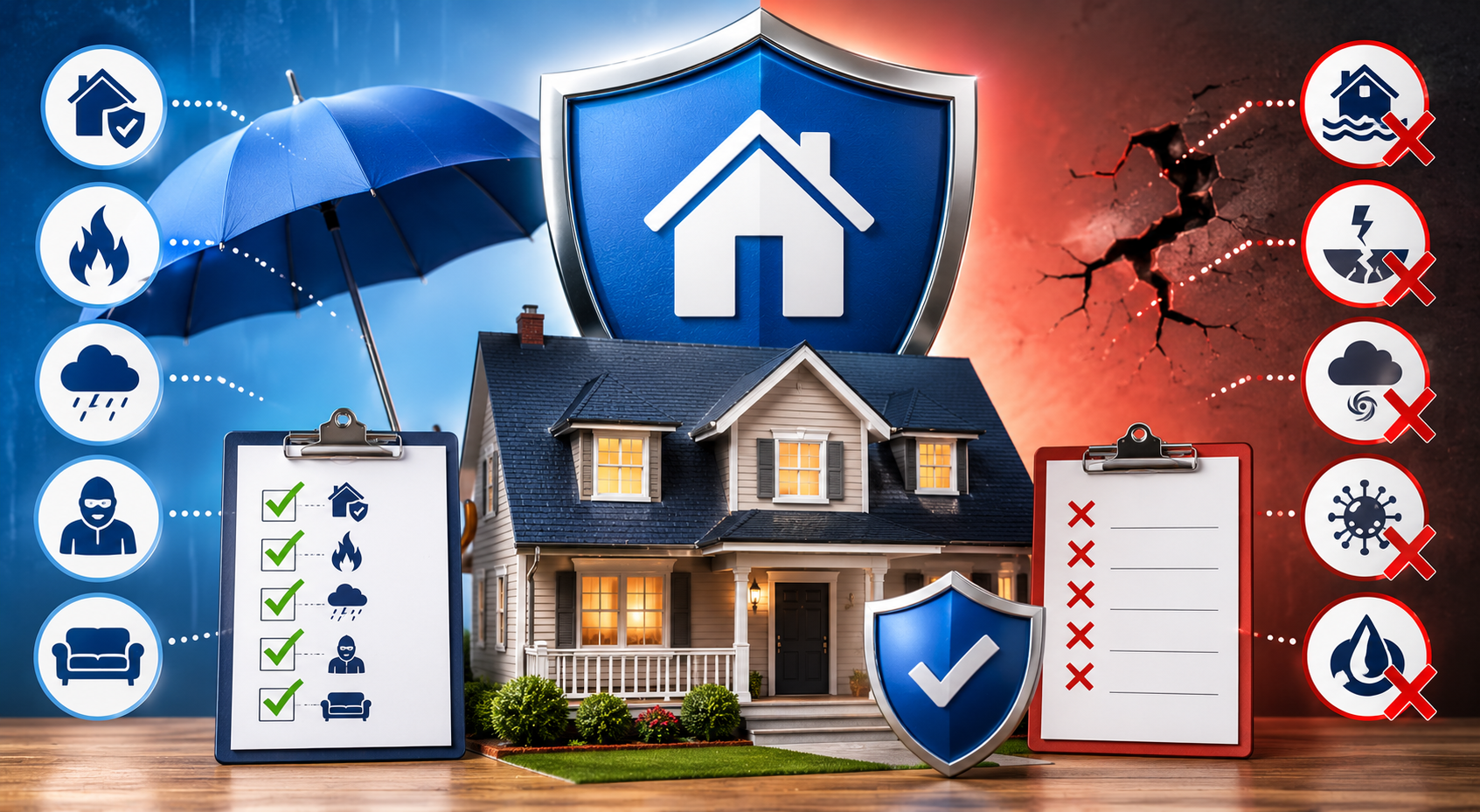
What Standard Home Insurance Covers
While policies vary by provider, standard homeowners insurance is designed to respond to sudden, accidental, and external events.
Fire and Lightning: Full restoration for damage from internal kitchen fires, electrical fires, and direct lightning strikes.
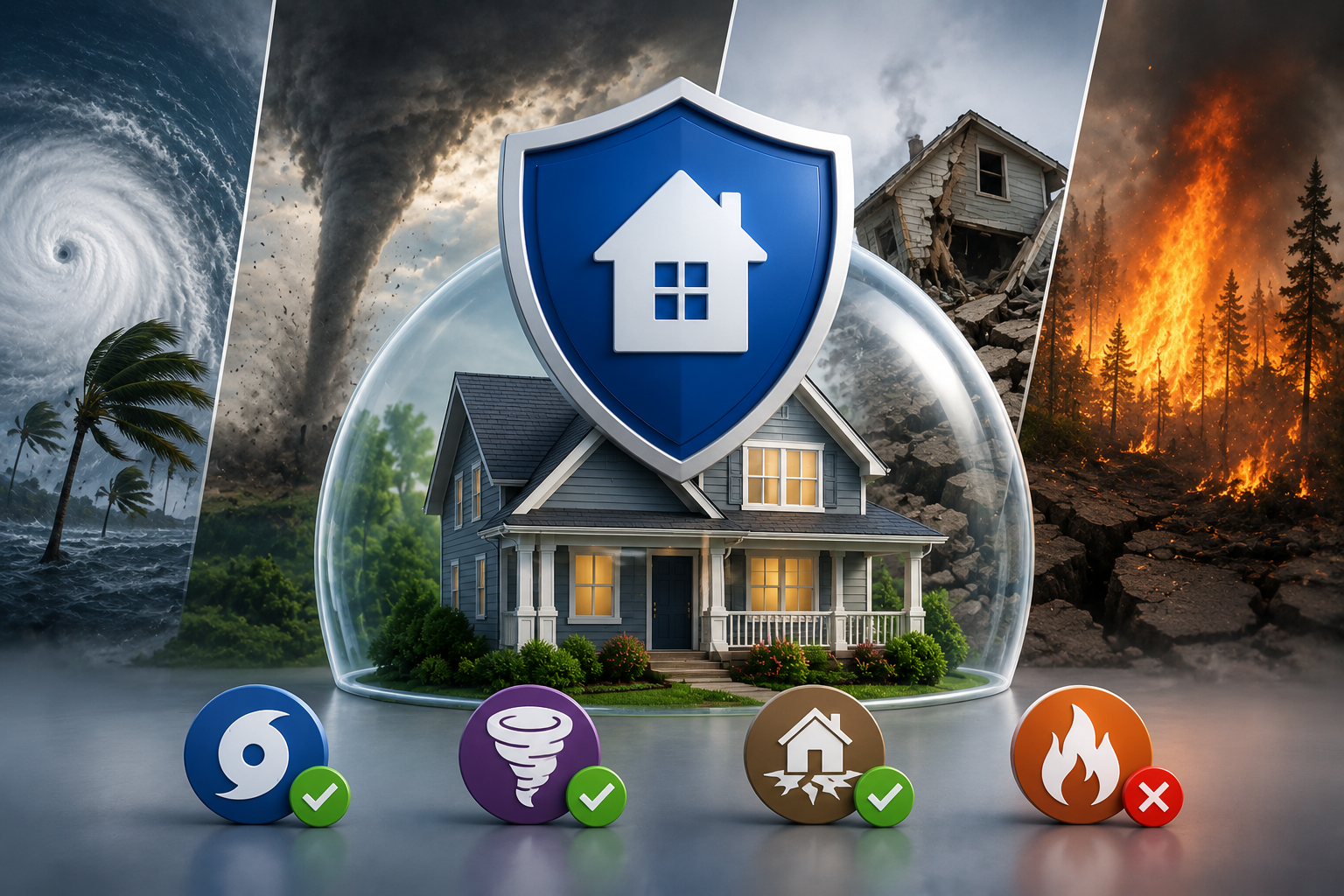
Wind and Hail: Protection from structural damage caused by tornadoes, straight-line winds, and hailstorms. Note that coastal properties often require a separate wind deductible or endorsement.
Theft and Malicious Mischief: Coverage to repair forced-entry damage and replace stolen personal property, subject to policy category sub-limits.
Sudden Water Discharge: If an appliance or plumbing pipe bursts unexpectedly, the resulting water cleanup and structural repair are covered. Gradual leaks over several months are excluded.
What Standard Home Insurance Does Not Cover
A clear understanding of policy exclusions is essential to avoiding unexpected out-of-pocket expenses following a loss.
1. Flood Damage
Standard home insurance policies do not cover damage caused by rising surface water, storm surges, or overflowing rivers. Property owners must secure separate protection through the National Flood Insurance Program (NFIP) or specialized private markets.
2. Earth Movement
Earthquakes, mudslides, sinkholes, and land slips are excluded from standard policies. Homeowners in seismically active areas need an independent earthquake policy or a specific endorsement.
3. Maintenance Neglect and General Wear
Insurance protects against sudden, accidental damage; it does not replace routine home maintenance. Damage from termites, mold, dry rot, roof degradation over 20 years, or slow plumbing leaks is considered preventable and will be denied.
4. Sewer Backups
If a municipal sewer line backs up and forces wastewater into your basement drains, standard property insurance will not cover the cleanup or repairs. Homeowners must add a specific water backup endorsement for this protection.
5. Ordinance or Law Changes
If updated local building codes require expensive material or structural upgrades during repairs, your policy will only pay to restore the home to its pre-loss condition. Covering code updates requires an Ordinance or Law endorsement.
Comprehensive Overview of Policy Coverages and Exclusions
Earthquakes, floods, regular wear and tear, pest infestations, nuclear hazards, acts of war.
Personal Property
Furniture, clothing, electronics, and appliances damaged by named perils.
High-value jewelry, fine art, collectibles exceeding category sub-limits, flood damage.
Liability
Legal defense fees, settlements, and judgements for guest injuries or accidental damage to others’ property.
Intentional injuries, business activities run out of the home, auto accidents, aircraft incidents.
Loss of Use
Hotel stays, restaurant bills, temporary storage, and laundry expenses during covered home repairs.
Expenses incurred due to government-mandated evacuations for uninsured events like floods.
Actual Cash Value vs. Replacement Cost Value
When setting up your property policy, the valuation method chosen significantly impacts your out-of-pocket expenses during a major claim.
Actual Cash Value (ACV)
ACV calculates payouts based on the current market value of your property, subtracting depreciation for age and wear. For example, if a storm destroys a 12-year-old roof with a 20-year lifespan, an ACV policy pays only a fraction of the cost of a new roof, leaving you to cover the remaining balance.
Replacement Cost Value (RCV)
RCV covers the actual cost to repair or replace damaged property using new materials of comparable quality, without deducting for depreciation. While RCV coverage carries higher monthly premiums, it provides far better long-term protection for your investment.
Extended & Guaranteed Replacement Cost
During regional natural disasters, localized shortages of construction labor and materials can drive rebuilding costs above your policy limits. Extended Replacement Cost provides an extra buffer (typically 10% to 50% above the dwelling limit), while Guaranteed Replacement Cost covers the full cost to rebuild your home, regardless of the final price tag.
Financial Metrics: Home Insurance Landscape
The economic environment for property owners has grown increasingly complex. Driven by supply chain pressures, elevated construction labor rates, and volatile global weather patterns, property protection costs are rising rapidly.
According to comprehensive market data compiled by The Zebra’s 2026 State of Insurance Report, the average American household now pays $2,966 annually for homeowners insurance. However, this national average masks severe regional variations driven by climate risk exposure.
For instance, homeowners in Florida face average annual premiums of $9,449. These rising costs create financial strain across the housing market: approximately 47% of surveyed homeowners report that they would struggle to pay their mortgages if premium rates continue to climb.
Modern Shifts in the Insurance Market
The global insurance market is adjusting to an escalation in weather-related claims, forcing major carriers to reevaluate how they price and distribute risk.
Climate Impacts and Underwriting Revisions
Analysis from Markel Insurance Insights shows that natural catastrophes now regularly exceed $100 billion in global insured losses each year. In response to this baseline shift, primary carriers are pulling out of higher-risk regions entirely or adjusting coverage structures to reduce exposure.
Traditional risk models based on broad, regional historical averages are being replaced. According to recent portfolio data analyzed by Insurance Business Magazine, underwritings have transitioned decisively toward site-level risk assessments.
By leveraging high-resolution satellite photography, real-time drone data, and machine learning algorithms, carriers now analyze individual properties for location-specific flood, coastal, and wildfire exposures. Consequently, two adjacent properties can receive dramatically different premium rates based entirely on slight variations in elevation or tree canopy clearance.
Regulatory Responses and State Frameworks
As private insurers reduce their footprints in high-exposure markets, state-backed programs are facing increased strain. In California, regulatory friction following severe wildfire seasons has reshaped the operating environment.
Reports on the California Insurance Commissioner race via the Insurance Journal highlight intense debate over structural policy reforms, ranging from public single-payer disaster frameworks to state-mandated home-hardening incentives. These regulatory adjustments reflect a broader, structural effort to maintain insurance availability as private capital pulls back from the most vulnerable markets.
Practical Action Items for Homeowners
To manage costs while maintaining sufficient protection, property owners should take a proactive approach to managing their policies.
Review Rebuild Valuations Annually: Ensure your dwelling limit reflects current local labor and material costs, not your home’s purchase price or real estate market value.
Implement Home-Hardening Measures: Installing impact-resistant roofing, clearing brush to create defensible space, and adding storm shutters can qualify you for premium discounts and improve policy renewability.
Optimize Deductibles Responsibly: Raising your standard deductible from $500 to $2,500 can lower your annual premium payments. However, you must ensure your emergency fund can cover that higher out-of-pocket cost if you need to file a claim.
Audit Policy Exclusions: Review your policy documents for hidden sub-limits on personal property, wind-hail deductibles, or missing water backup endorsements.
Understanding your homeowners insurance policy ensures you can make informed adjustments before a crisis occurs, protecting your family and securing your long-term financial stability.