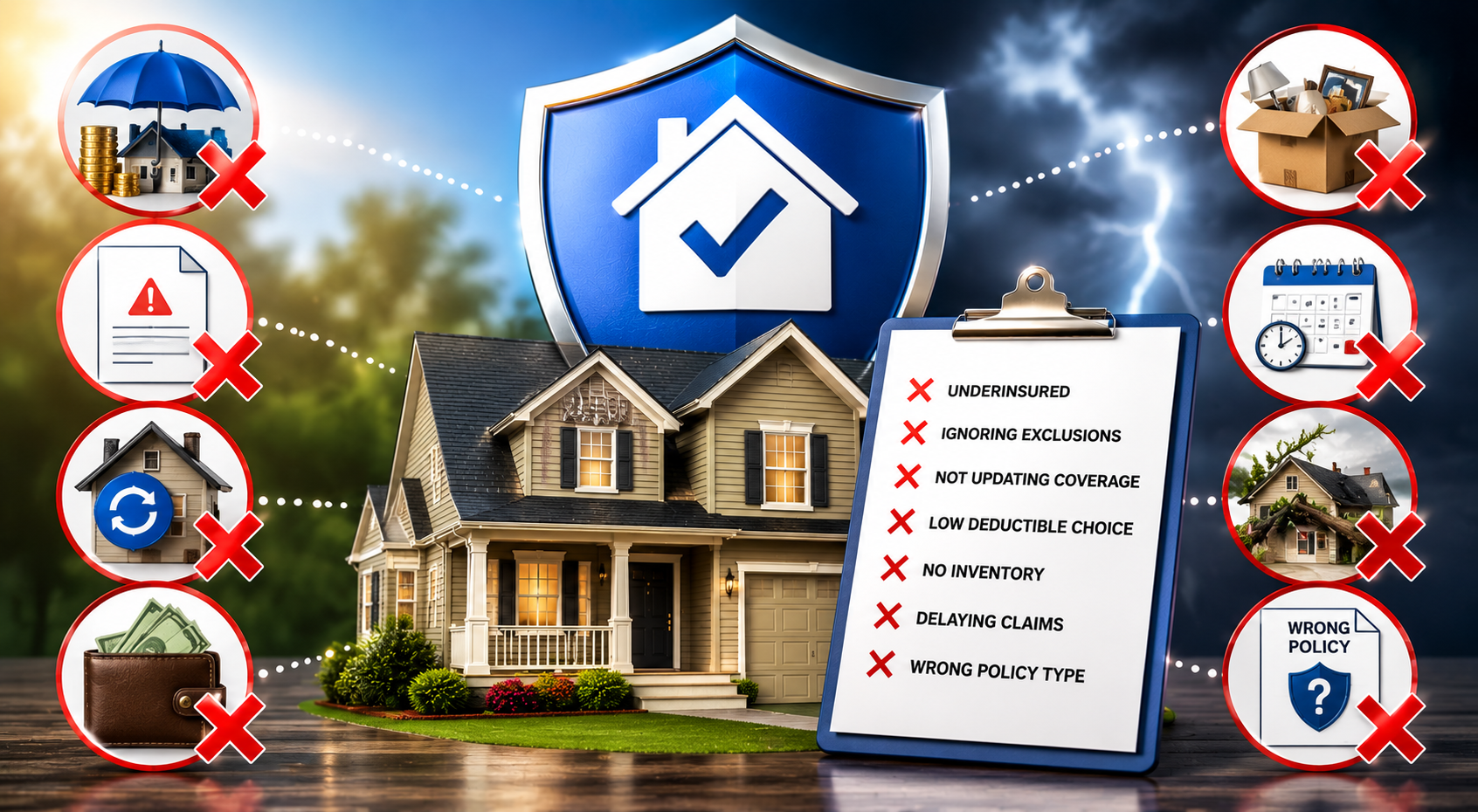
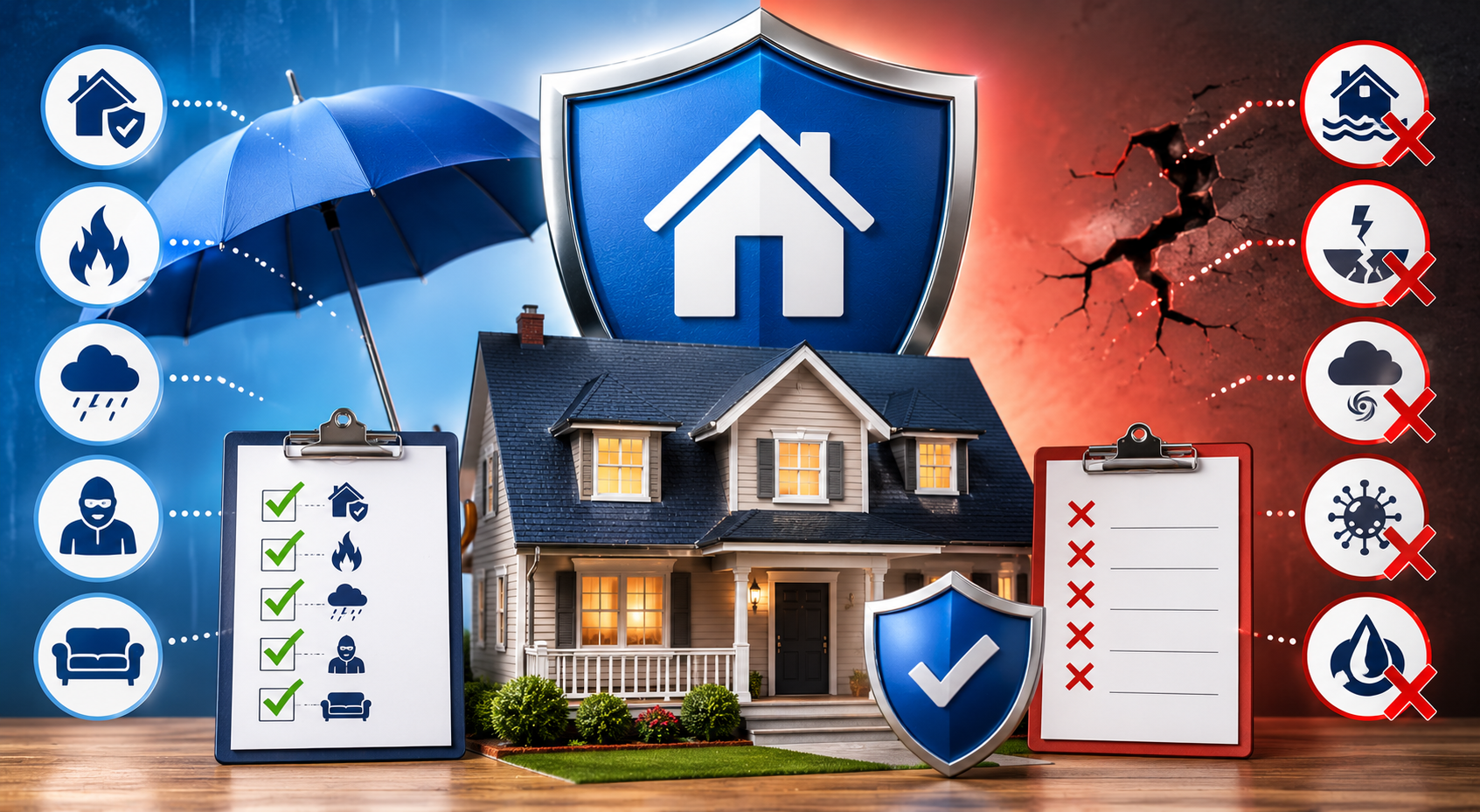
Opening a home insurance renewal letter has become a stressful experience for property owners worldwide. The real estate market is navigating a severe cost crisis driven by a volatile mix of historic inflation, shifting regulations, and escalating climate disasters.
Data shows that property protection costs are climbing rapidly. In the United States, home insurance premiums rose by 12.7% in 2023 and another 10.4% in 2024, far outpacing standard consumer price inflation. Globally, the story is remarkably consistent. Market tracking reveals that the average cost of house insurance jumped by 37% over a swift three-year window, leaving millions of families financially vulnerable.
In this high-stakes financial environment, small oversights in how you manage your policy can lead to severe consequences. If you treat home insurance as a passive, “set-and-forget” monthly bill, you risk face-to-face rejection during a catastrophic claim or overpaying by thousands of dollars each year.
This comprehensive guide details the costliest insurance mistakes modern homeowners make and provides actionable, data-backed strategies to safeguard both your home and your bank account.
Mistake 1: Setting a “Ghost” Sum Insured (The Underinsurance Trap)
The single most dangerous misconception among property owners is confusing their home’s real estate market value with its rebuild cost. Your home’s market value includes factors like neighborhood popularity, school districts, and land value. In contrast, your insurance company cares only about the raw cost of physical materials and construction labor required to clear debris and rebuild the structure from the ground up.
Years ago, the industry shifted from “total replacement” contracts to explicit “sum insured” limits. This means if your policy states a maximum dwelling cap of $400,000, that is the absolute most the carrier will pay out, even if supply chain spikes drive the actual reconstruction invoice to $550,000.
The Danger of Rebuild Inflation
According to recent sector updates, underinsurance has emerged as a significant and widespread risk for modern households. Even though raw construction cost inflation has cooled slightly from its pandemic-era peaks, the structural baseline for building supplies and skilled labor remains highly elevated.
If you continue to base your coverage limits on real estate estimates from 2019 or 2022, your home is severely underinsured. Industry research reveals that roughly 24% of property owners do not understand how underinsurance works, meaning they only discover their coverage gaps after a fire or severe storm has caused major damage.
Mistake 2: Failing to Disclose Home Upgrades and Remodels
Have you recently added solar panels, upgraded your kitchen insulation, or put on a new back deck? If so, you may be missing a critical step in protecting your investment.
A comprehensive study from the Bank of Ireland Insurance Services highlights a major blind spot for modern property owners: while 31% of homeowners invested heavily in green energy transitions and layout expansions over a three-year period, a striking 61% of those who made improvements completely failed to notify their insurance carriers.
Failing to report home improvements creates two major financial risks:
Immediate Underinsurance: Your upgraded high-efficiency appliances, premium countertops, or solar arrays are not factored into your dwelling or personal property caps, leaving them uncovered if a total loss occurs.
Missed Premium Discounts: Many modern upgrades actually reduce your risk profile. Informing your agent about a brand-new roof, updated electrical wiring, or smart security systems can often trigger dynamic premium discounts that lower your annual bill.
Mistake 3: Relying on Flat Regional Rates in the Era of Granular Risk Pricing
Many buyers assume that if their home has the same square footage as a property three towns over, their insurance costs should be roughly identical. This assumption is completely false in today’s market. The era of predictable, flat national or statewide insurance averages is dead.
Driven by modern algorithmic risk assessment, underwriting platforms have shifted from broad regional models to highly targeted, location-specific profiling. Carried out via high-resolution satellite imagery and advanced AI risk modeling, carriers now evaluate individual properties based on precise GPS coordinates.
As a result, two homes on opposite sides of the same street can receive completely different premium quotes based on slight variations in elevation, local flood maps, or nearby tree canopy clearance.
Home Insurance Mistake Checker & Policy Audit
Quickly evaluate your property protection habits. Discover hidden coverage gaps, check your underinsurance risk, and find out if you are overpaying due to carrier loyalty.
1. Self-Audit Questionnaire
Mistake #1: Confusing market value with actual local rebuild costs.
Mistake #2: Leaving structural additions or green solar upgrades completely uninsured.
Mistake #4: Falling victim to auto-renewal “price optimization” price hikes.
Mistake #5: Paying high premiums for a low, easily triggered claims deductible.
2. Policy Vulnerability Report
Your Policy Risk Level
Calculating…
Financial Metrics Impact
Underinsurance Gap:
High Risk
Premium Optimization:
Overpaying
Tailored Corrective Action
Evaluating questionnaire data strings…
Understanding the Climate-Driven Premium Divide
The financial consequences of location-based risk pricing are severe, creating stark premium divides across geographic zones:
Geographic Profile
Risk Assessment Factors
Average Annual Premium
Market Availability Status
Low-Risk Inland Zone
Flat elevation, minimal tree canopy, low historical storm activity.
$2,000 to $2,800
Highly competitive; multiple carriers bidding.
High Seismic Zone
Proximity to faults, high structural strain vulnerabilities.
Exposed coastal zones, active wildfire paths, high convective storm trends.
$5,900 to $14,140
Extreme constraints; carriers dropping out or capping policies.
This clear breakdown highlights how climate exposures directly dictate your baseline insurance costs. In extreme zones like Florida or coastal areas, spiking liabilities have driven average annual premiums past $9,000, making insurance costs a massive portion of total mortgage expenses.
Failing to check local hazard maps before buying a new home can saddle you with an uninsurable property or a surprise premium that breaks your monthly budget.
Mistake 4: Practicing Blind Loyalty to Your Current Carrier
Many property owners hold a false sense of security regarding their long-term insurance relationships. They assume that staying with the same company for a decade means their rates will remain fair. In reality, practicing blind loyalty is one of the quickest ways to overpay for coverage.
The insurance industry frequently practices a pricing strategy known as price optimization. Insurance algorithms analyze consumer behavior data to identify which policyholders are least likely to shop around for a better rate. Loyal customers are often hit with steady, incremental rate hikes at every renewal cycle, while brand-new customers are offered competitive entry-level discounts.
The Danger of Auto-Renewing Without a Review
Market research reveals that only 40% of consumers review their coverage terms in detail before hitting the renew button. Nearly half admit that they simply auto-renew their policy without looking at the fine print, as long as the price stays within a vaguely acceptable threshold.
By letting your policy auto-renew without shopping around, you miss out on substantial savings. Independent brokerage data confirms that proactively running market scans can help homeowners uncover alternative options that cut hundreds of dollars from their annual bill for the exact same level of structural protection.
Mistake 5: Holding Onto a Low Deductible
When selecting a policy, beginners often choose the lowest available deductible, typically $500, believing it provides the best financial protection. However, maintaining a low deductible means you pay a significantly higher annual premium over the life of your policy.
Insurance is fundamentally designed to protect your household from catastrophic, life-altering financial losses, such as a total house fire or a severe roof collapse. Using your insurance policy to file small, minor claims like a $1,200 fence repair or a cracked window glass pane is a major strategic mistake.
The Risk of Small Claims
Filing multiple minor claims within a three-year window sets off red flags for insurance algorithms. The system reclassifies your property as a high-frequency risk zone, which triggers sharp premium increases at your next renewal or causes the carrier to cancel your policy entirely.
To maximize your long-term savings, consider raising your standard all-peril deductible to $2,500 or $5,000. This immediately lowers your annual premium obligation, allowing you to reallocate those savings into an emergency fund to handle small repairs out of pocket.
Summary Action Plan for Homeowners
To avoid these common pitfalls and optimize your home insurance strategy, execute this quick four-step safety audit:
Calculate Your True Rebuild Value: Do not rely on your real estate appraisal or a general guess. Use an industry-verified building calculator or hire an independent surveyor to get an accurate estimate of current material and construction labor costs in your zip code.
Report Every Property Modification: Keep your agent updated on any home improvements, including solar installations, electrical upgrades, or new security systems, to ensure your coverage limits are accurate and capture any available discounts.
Shop Your Policy at Every Renewal: Treat every renewal notice as an invitation to shop around. Run a comprehensive market scan to compare competing quotes and keep your current carrier honest.
Strategically Raise Your Deductible: If your emergency fund can cover it, raise your deductible to $2,500 or $5,000 to drop your annual premium costs. Reserve your insurance policy strictly for major, catastrophic losses.
By avoiding these structural mistakes, you can protect your property, eliminate unnecessary premium costs, and ensure your home’s financial safety net remains fully intact when you need it most.