Opening your annual property insurance renewal notice has become a highly stressful event. Driven by a volatile mix of historic inflation in building materials, skilled trade labor shortages, and an increase in severe convective storms, global property premiums have reached record highs.
According to market data, homeowners have watched their baseline insurance premiums rise by more than 30% over a short three-year window. In high-exposure catastrophe zones, the financial strain is even more severe.
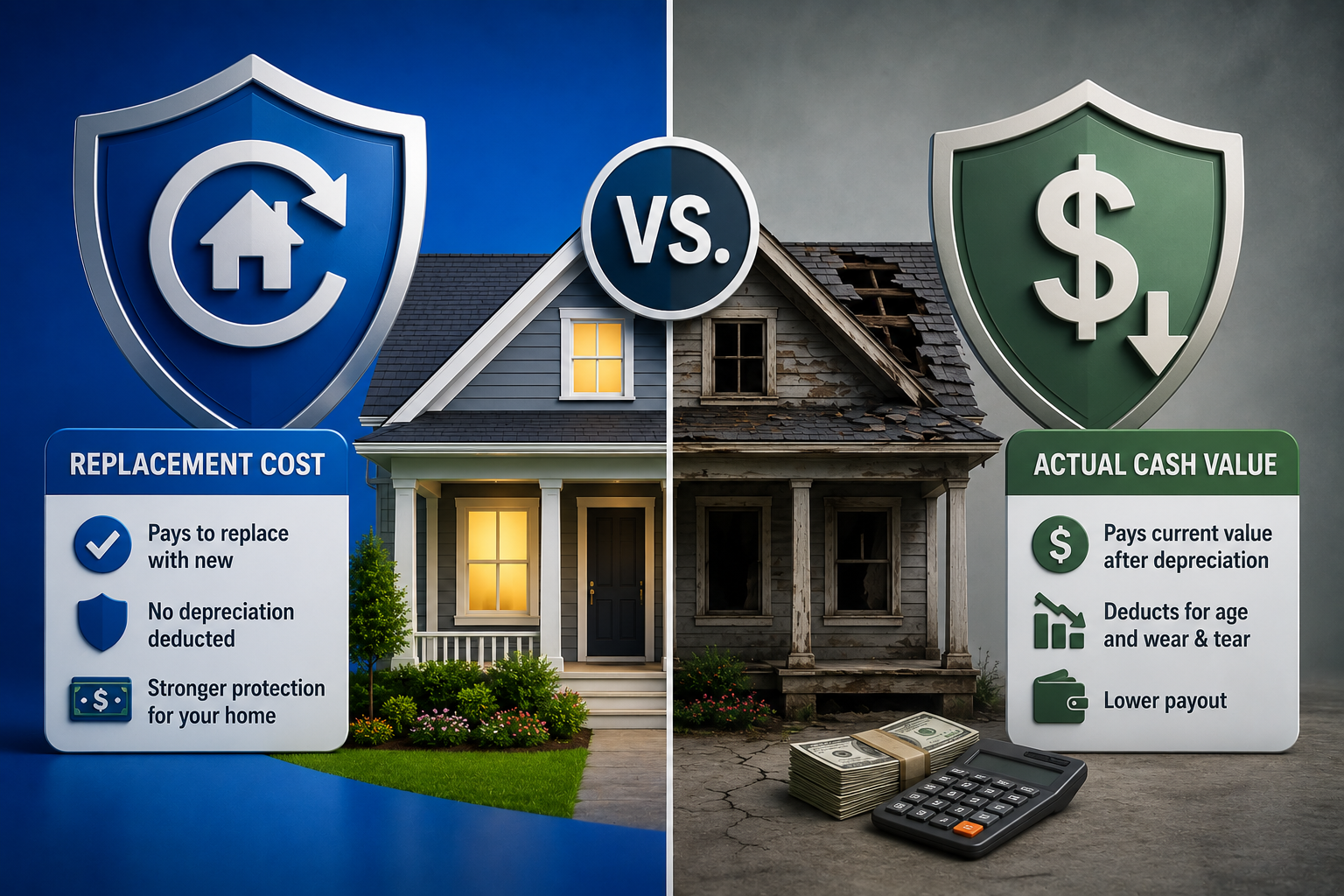
To manage these soaring monthly costs, many property owners are looking for ways to trim their premiums. Insurance carriers are responding by offering policies that shift from Replacement Cost Value (RCV) to Actual Cash Value (ACV), particularly on aging systems like roofs.
While opt-in ACV adjustments can instantly lower your annual bill, choosing the wrong valuation model can leave your household exposed to devastating out-of-pocket costs after a loss.
This comprehensive, data-driven guide explains the differences between RCV and ACV, breaks down the math behind claims payouts, exposes the 2026 insurance age trap, and outlines strategic pathways to help you choose the right model to protect your home.
RCV vs ACV Claims Payout Calculator
RCV vs. ACV Claim Payout & Gap Estimator
Input your property variables to model the real mathematics of depreciation. Instantly visualize your personal out of pocket risk and compare RCV against ACV coverage models.
1. Property & Claim Inputs
Select a pre-configured scenario or build your own below.
$20,000
The total invoice cost to replace or rebuild your damaged asset with brand-new materials today.
The amount of upfront risk you retain. This value is subtracted from your settlement check.
2. Payout Comparison Report
Settlement Payout vs. Your Out of Pocket Cost
OOP
PAYOUT
Replacement Cost(RCV Policy)
OOP
PAYOUT
Actual Cash Value(ACV Policy)
Insurance Check Payout
RCV Out of Pocket
ACV Out of Pocket
RCV Settlement Details
Claim Value Estimate:$20,000
Depreciation Applied:$0 (None)
Deductible Offset:-$2,000
Final Check Payout:$18,000
Total Out of Pocket:$2,000
ACV Settlement Details
Claim Value Estimate:$20,000
Depreciation Applied (60%):-$12,000
Deductible Offset:-$2,000
Final Check Payout:$6,000
Total Out of Pocket:$14,000
Evaluating current policy variables…
1. Defining the Core Concepts: RCV and ACV
When you file a property claim, your policy relies on one of two foundational valuation models to determine how much money you receive. The fundamental difference lies in how the insurance company treats depreciation: the loss in value an asset experiences over time due to age, wear, and tear.
What is Replacement Cost Value (RCV)?
An RCV policy is designed to put you back in the exact position you were in before a covered loss occurred. It pays the actual cost to repair or replace damaged property with new materials of similar kind and quality at today’s retail prices.
With RCV, the insurer does not deduct any money for the age, wear, or physical deterioration of your home’s structural components. If a kitchen fire destroys 15-year-old wooden cabinets, your RCV policy will pay the current market rate to install brand-new cabinets of comparable quality.
An ACV policy pays only what your property was worth at the moment of the loss. It calculates the replacement cost of the item at today’s retail prices and then subtracts a financial deduction for physical depreciation.
Essentially, ACV pays you the second-hand market value of your property. If your 10-year-old washing machine is destroyed, an ACV settlement will only pay you what a 10-year-old, heavily used washing machine is worth today, rather than what it costs to buy a new one off the showroom floor.
2. The Financial Mathematics of Depreciation
To understand how these valuation models impact your wallet, you must look at the mathematical formulas adjusters use during the adjudication phase.
Let us look at a real-world scenario. Suppose a severe hailstorm destroys your home’s roof. Your independent contractor provides a bid of R = $20,000 to tear off the damaged materials and install a new, code-compliant roof. Your policy has an all-peril deductible of D = $2,000.
The damaged roof is exactly A = 12 years old and had an expected useful lifespan of L = 20 years.
The Actual Cash Value (ACV) Calculation Method
First, the claims adjuster calculates the physical depreciation of your roof using the standard lifespan ratio:
\text{Depreciation} = R \times \left( \frac{A}{L} \right)
Because your roof has completed 60% of its useful life, the insurer deducts $12,000 for age and wear. Next, the adjuster subtracts this depreciation from the current replacement cost to determine the actual cash value of your roof:
\text{Actual Cash Value} = R - \text{Depreciation}
Under an ACV policy, your insurer sends you a check for $6,000. Because the contractor requires $20,000 to complete the job, you must pay the remaining balance out of your own pocket:
The Replacement Cost Value (RCV) Calculation Method
Under an RCV policy, the claims adjuster does not deduct for depreciation. The net claim payout is calculated simply by subtracting your deductible from the total estimated replacement cost:
Under an RCV policy, your insurer ultimately pays $18,000 for the repairs, leaving you with a much smaller out-of-pocket bill:
\text{Your Out-of-Pocket Expense (RCV)} = D = \$2,000
This math highlights the stark financial divide between the two policies. In this scenario, having an ACV policy instead of an RCV policy costs you an additional $12,000 out of pocket to restore your roof.
3. The 2026 Insurance “Age Trap” and Roof Coverage Shifts
Homeowners must understand that the choice between RCV and ACV is no longer always voluntary. The insurance industry is actively managing its risk exposure to older homes, creating what consumer advocates call the insurance Age Trap.
Historically, most homeowners policies default to RCV for both the dwelling structure and personal belongings. However, as severe weather events drive up claims, private insurers are changing their terms.
When a residential roof reaches a certain age, typically 12 to 15 years for standard asphalt shingles, carriers may automatically convert your roof coverage from RCV to ACV at renewal time. If you do not read your renewal paperwork closely, you may assume you still have full replacement cost coverage, only to discover a massive coverage gap after a storm strikes.
This shift has created a significant divide in the housing market, as detailed in the DT Roofing 2026 Insurance Age Trap Guide. Homeowners with older roofs are finding themselves stuck in a difficult position: they must either pay out of pocket to install a brand-new roof to keep their RCV coverage, or accept an ACV policy that leaves them underinsured.
4. The Mortgage Lender Collision: Fannie Mae and Freddie Mac
The automatic conversion of property policies to ACV has created a regulatory conflict with mortgage lenders. Conventional home loans require borrowers to maintain active homeowners insurance that protects the lender’s financial interest in the property.
Standard guidelines from major lending institutions, including Fannie Mae and Freddie Mac, state that the borrower’s policy must provide coverage sufficient to repair or replace the dwelling structure.
If your insurance company moves your roof or structural coverage to an ACV model, the policy may no longer satisfy your lender’s replacement coverage rules.
The Risk of Force-Placed Insurance
If your lender discovers that your home is insured under an ACV policy that does not meet their guidelines, they can declare you in default of your loan agreement. To protect their investment, the bank can purchase force-placed insurance on your behalf.
Force-placed insurance is a major financial risk for homeowners:
Extreme Pricing: These policies are often three to four times more expensive than standard homeowners policies.
Inferior Coverage: Force-placed policies usually provide no coverage for your personal belongings, nor do they include personal liability protection.
Escrow Inflation: The steep cost of the policy is automatically added to your monthly mortgage escrow account, which can cause your monthly house payment to climb dramatically.
5. RCV vs. ACV: Comprehensive Comparison Matrix
The table below outlines the core differences between these two valuation methods across key policy factors:
Comparison Category
Replacement Cost Value (RCV)
Actual Cash Value (ACV)
Depreciation Deduction
No depreciation is deducted from your claim payout.
Depreciation is deducted based on the age and condition of the item.
Monthly Premium Cost
Higher baseline premiums (typically 10% to 20% more than ACV).
6. Extended and Guaranteed Replacement Cost: Advanced Safety Nets
If you choose an RCV policy, you should also understand two important policy extensions designed to protect your home from regional building cost spikes:
Extended Replacement Cost
Following a widespread natural disaster like a major tornado or regional wildfire, the sudden demand for local construction labor and materials can cause building costs to spike. This is known as demand surge.
If your home costs $400,000 to rebuild under normal conditions, a post-disaster demand surge can quickly drive that cost to $500,000, exceeding your policy’s dwelling limit.
Extended Replacement Cost provides a buffer, typically 25% to 50% above your policy’s stated dwelling limit, to cover these unexpected rebuilding cost spikes.
Guaranteed Replacement Cost
Guaranteed Replacement Cost offers the highest level of protection available. It pays the full cost to rebuild your home to its original standard after a covered loss, regardless of the final price tag or policy limits.
Even if construction costs double during repairs, a Guaranteed RCV policy protects you from paying the difference out of pocket.
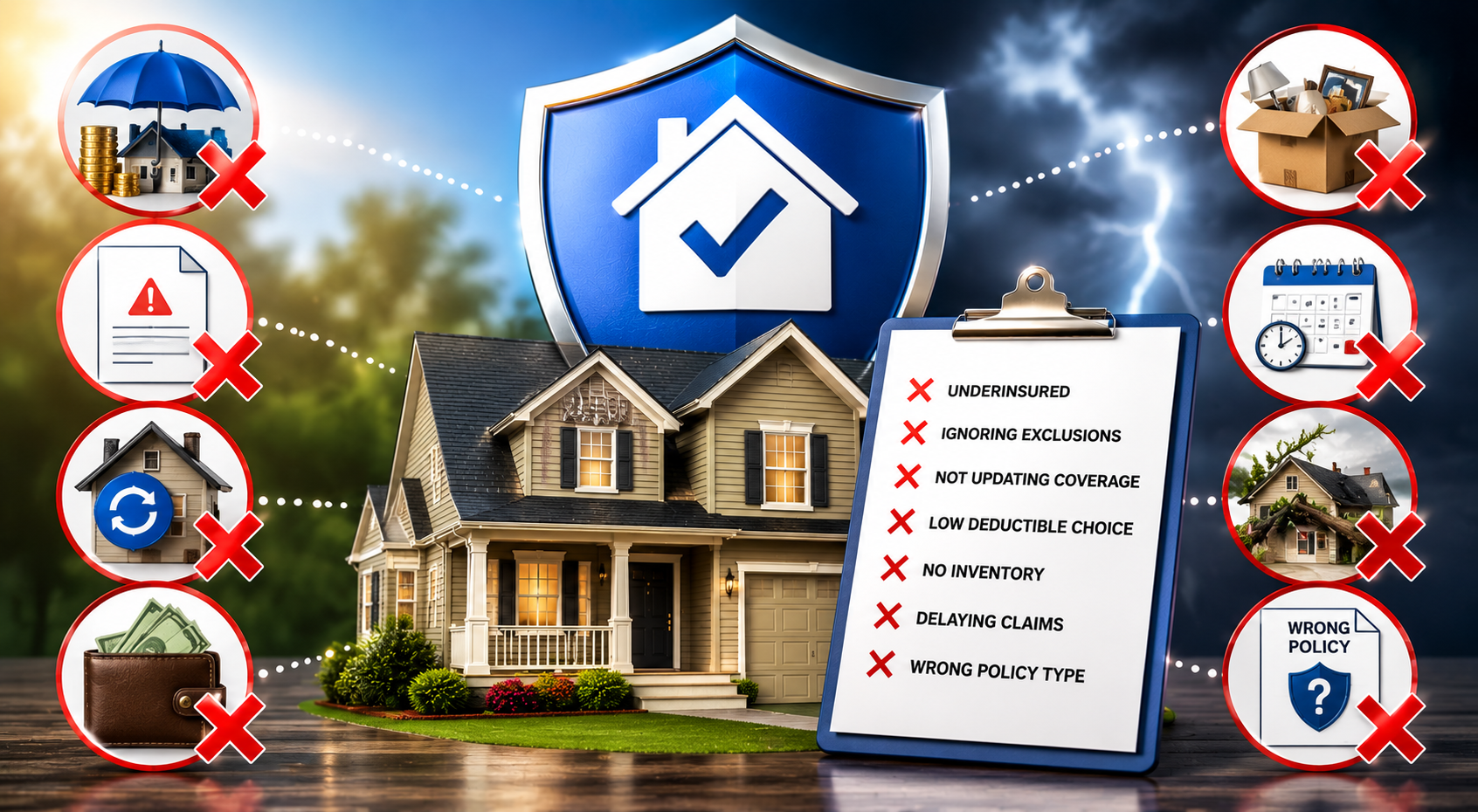
You do not have to wait for a disaster to find out how your insurance company handles property claims. Take these proactive steps to audit your policy and protect your investment:
Step 1: Review Your Policy Declarations Page
Locate your policy’s declarations page and look for the specific terms used to describe your coverage settlements.
Check both the Dwelling (Coverage A) and Personal Property (Coverage C) sections. If you see terms like “Indemnity Settlement” or “Actual Cash Value Basis,” your policy will deduct for depreciation during a claim.
Step 2: Check Your Roof’s Settlement Terms
Ask your insurance agent for a clear explanation of how your roof is covered. If your roof is more than 10 years old, verify whether your carrier has updated your policy to an ACV schedule for wind and hail damage.
Step 3: Request an RCV Endorsement
If your policy currently covers your personal property on an ACV basis, you can often buy a personal property replacement cost endorsement. This budget-friendly add-on typically increases your premium by just 10% to 15%, but it upgrades your belongings coverage from depreciated market value to full replacement cost.
Step 4: Maintain an Updated Home Inventory
If you have an RCV policy, your insurer may split your payout into two checks: an initial ACV check based on the depreciated value of your items, followed by a second check once you submit receipts proving you replaced the items.
To ensure you receive your full payout, maintain an updated home inventory with photos, model numbers, and receipts stored securely in the cloud.
8. Conclusion: Which Is Better for You?
When comparing Replacement Cost Value and Actual Cash Value, the better option depends on your financial situation and risk tolerance.
For the vast majority of homeowners, Replacement Cost Value (RCV) is the superior choice. While RCV carries higher monthly premiums, it provides complete financial protection, ensures you can rebuild your home without taking on massive debt, and satisfies your mortgage lender’s requirements.
Actual Cash Value (ACV) may make sense if you own an older home that does not qualify for standard replacement coverage, or if you are insuring a basic, unmortgaged structure where you are comfortable taking on the risk of depreciation.
By understanding how depreciation is calculated, checking your policy’s renewal terms, and avoiding underinsurance traps, you can secure a reliable safety net that protects your family, preserves your home equity, and keeps your financial future secure.