Full coverage costs about 136 dollars a month nationally in 2026, versus about 67 dollars a month for liability-only, a gap of roughly 69 dollars a month, or 102 percent more, according to MoneyGeek’s 2026 rate analysis.
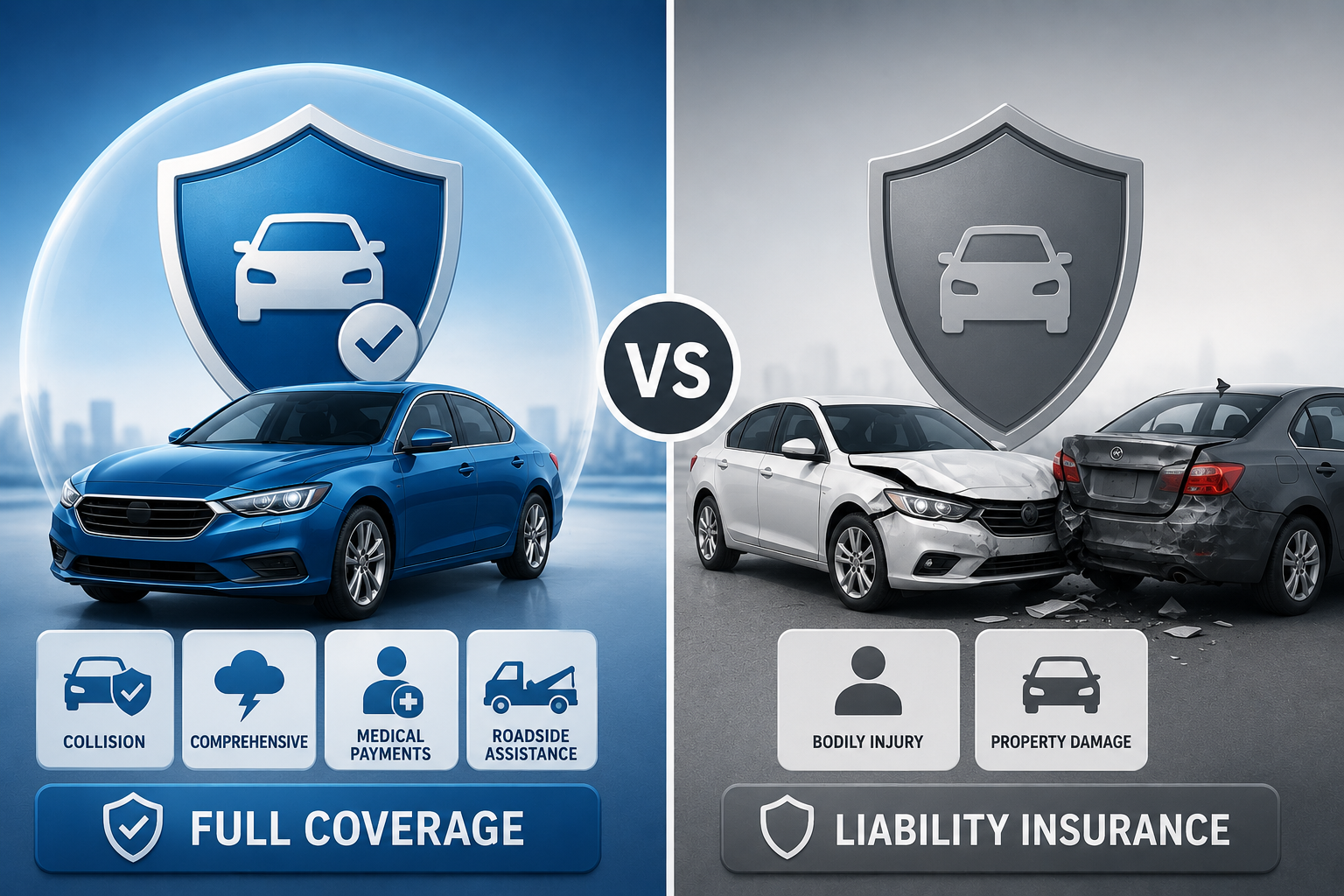
Liability insurance pays for damage and injuries you cause to other people. It never pays to repair or replace your own vehicle. Full coverage adds collision and comprehensive coverage on top of liability, so your own car is protected too.
No state requires full coverage by law, but lenders and leasing companies require it in all 50 states for as long as you owe money on the vehicle.
A common rule of thumb: liability-only tends to make financial sense once your car is worth less than about 4,000 to 6,000 dollars, or once your full coverage premium exceeds 10 percent of the car’s market value.
The dollar gap between liability and full coverage varies enormously by state, from roughly 93 dollars a month in Colorado up to 142 dollars a month in Louisiana.
Several states raised minimum liability requirements in 2026, which means even liability-only policies are getting more expensive this year, separate from the full coverage decision.
Every driver eventually faces the same question at renewal time: do I really need full coverage, or is liability-only good enough? The honest answer is that it depends on your car’s value, whether you owe money on it, and how much risk you can comfortably absorb out of pocket. This guide walks through the real 2026 cost numbers, what each type of policy actually pays for, and a simple framework to help you decide with confidence.
Liability vs Full Coverage: The Basics
Liability-Only
Pays for injuries and property damage you cause to other people
Required in nearly every state at some minimum level
Never pays to repair or replace your own vehicle
Two parts: bodily injury liability and property damage liability
Cheapest option, but leaves your own car unprotected
Full Coverage
Not a single policy, it is a combination of liability plus collision and comprehensive
Collision pays for crash damage to your own car, regardless of fault
Comprehensive pays for theft, vandalism, fire, weather, and animal strikes
Required by lenders and leasing companies on financed vehicles
Comes with a deductible on the collision and comprehensive portions
In plain terms, liability covers the other driver. Full coverage covers the other driver and you. The term full coverage is really just industry shorthand for bundling liability with collision and comprehensive insurance into one policy.
2026 Cost Comparison
According to MoneyGeek’s 2026 national rate analysis, the average cost difference between the two options is substantial and has only grown as repair costs and vehicle values have climbed.
$67/mo
Average liability-only premium
$136/mo
Average full coverage premium
$69/mo
Average monthly cost of going full coverage
~$828/yr
Typical annual savings by choosing liability only
Average Monthly Premium: Liability vs Full Coverage
National average, 2026, sample driver with 100/300/100 liability limits
Source: MoneyGeek 2026 national auto insurance rate analysis.
Other trackers report similar gaps using different driver profiles. ValuePenguin estimates drivers save more than 1,300 dollars a year on average by choosing minimum liability instead of full coverage with higher liability limits, while SmartFinancial puts minimum liability at around 820 dollars a year against roughly 2,697 dollars a year for full coverage. The exact figures shift depending on coverage limits and deductible chosen, but every major tracker agrees full coverage typically costs two to three times more than liability-only.
Five-Year Cost of Choosing Liability Over Full Coverage
Cumulative savings at an average gap of about 828 dollars per year
Illustrative calculation based on the 828 dollar average annual gap reported by MoneyGeek for 2026. Actual savings depend on your state, vehicle, and driving record, and do not account for potential repair costs you would pay out of pocket without full coverage.
Important: This savings chart only shows what you keep in your pocket each year. It does not include what you would owe out of pocket if you caused an accident or had your car stolen or totaled while carrying liability-only coverage. Run the numbers against your own emergency savings before deciding.
How the Price Gap Changes by State
Where you live changes the math significantly. States with higher vehicle values, more litigation, or more severe weather tend to have a much wider gap between liability and full coverage pricing.
Largest Monthly Gaps Between Liability and Full Coverage
Selected states, 2026
Source: MoneyGeek 2026 national rate analysis. Louisiana’s gap is the largest in the country, driven by high litigation rates and elevated claims severity.
Louisiana has the widest gap in the country, in large part because the state generates more auto insurance litigation than almost anywhere else, which pushes both liability and full coverage premiums higher, but pushes full coverage up even faster. By contrast, states with lower litigation activity and milder weather, such as Vermont, tend to have a much smaller gap between the two options.
What Each Policy Actually Pays For
Coverage
Included In
What It Pays For
Bodily injury liability
Liability and full coverage
Medical bills, lost income, and legal costs for people you injure
Property damage liability
Liability and full coverage
Repairs to another person’s car, fence, or property you damage
Collision
Full coverage only
Damage to your own car in a crash, regardless of who is at fault
Comprehensive
Full coverage only
Theft, vandalism, fire, hail, flooding, and animal strikes
Medical payments or PIP
Optional add-on
Your own medical bills after an accident, regardless of fault
Gap insurance
Optional add-on
The difference between your loan balance and your car’s value if it is totaled
2026 News Affecting This Decision
2026 Update: New Jersey raised its minimum liability and uninsured and underinsured motorist coverage requirements at the start of 2026, which means even drivers who only want liability-only protection in that state are now paying more for the legal minimum than they were a year ago.
2026 Update: The average new vehicle now costs roughly 48,000 dollars, while many state property damage liability minimums remain stuck at 25,000 dollars or lower. That gap means a driver carrying only the state minimum could be personally on the hook for tens of thousands of dollars after causing an accident involving a newer vehicle, separate from the full coverage decision on their own car.
2026 Update: Rising vehicle values and repair costs pushed full coverage premiums up faster than liability premiums again this year, according to MoneyGeek’s rate tracking, widening the dollar gap between the two options even as overall rate growth slowed nationally.
When Liability-Only Makes Sense
Your car is paid off and worth less than about 4,000 to 6,000 dollars. At that value, a full coverage payout after a total loss may not be much more than what you would have paid in premiums over a few years.
Your full coverage premium exceeds 10 percent of your car’s market value. This is the most commonly cited rule of thumb among insurance analysts for when collision and comprehensive stop making financial sense.
You have enough savings to replace the car outright. If you could comfortably buy a replacement vehicle in cash, the risk of going without collision and comprehensive becomes more manageable.
You drive infrequently or store the car for long stretches. Lower exposure to crash risk can make the extra cost of collision coverage harder to justify on an older vehicle.
When You Need Full Coverage
You are financing or leasing the vehicle. Lenders and leasing companies require full coverage in all 50 states for as long as you owe money on the car, with no exceptions.
Your car is newer or holds significant value. The more expensive your vehicle is to repair or replace, the more financial exposure you carry without collision and comprehensive.
You could not comfortably absorb a total loss out of pocket. If replacing your car in cash would create real financial hardship, full coverage is doing its job.
You live somewhere with high theft, vandalism, or severe weather risk. Comprehensive coverage specifically protects against these non-collision risks, which are common in many parts of the country.
Quick Decision Checklist
Question
If Yes
Do you still owe money on the car?
Full coverage is required by your lender
Is the car worth more than 6,000 dollars?
Full coverage is usually worth considering
Is your full coverage premium under 10% of the car’s value?
Full coverage is likely still cost-effective
Could you replace the car in cash without hardship?
Liability-only becomes a reasonable option
Do you live in a high theft or severe weather area?
Comprehensive coverage adds real protection
How to Lower the Cost of Full Coverage
Raise your deductible. Moving from a 250 dollar deductible to 1,000 dollars can lower collision and comprehensive premiums by roughly 25 to 40 percent.
Enroll in a telematics program. Usage-based insurance can add an automatic enrollment discount plus further savings of up to 30 to 50 percent for verified safe driving with several major insurers.
Bundle with home or renters insurance. Combining policies commonly saves 15 to 25 percent with major carriers, and even a basic renters policy can unlock the discount.
Compare quotes every renewal. Pricing differences between insurers for the same coverage can run into the hundreds of dollars, so getting three or more quotes before renewing is one of the most effective ways to lower full coverage costs.
Ask about usage limits if you drive infrequently. Low-mileage and pay-per-mile programs can substantially reduce the cost of keeping full coverage on a car you do not drive often.
Frequently Asked Questions
Is full coverage really more expensive than liability?
Yes, significantly. National 2026 data puts full coverage at roughly 136 dollars a month against about 67 dollars a month for liability-only, a gap of around 69 dollars a month driven by the added collision and comprehensive coverages.
Can I drop full coverage on a car I still owe money on?
Generally no. Lenders and leasing companies require full coverage on financed and leased vehicles in all 50 states. If you drop it without the lender’s knowledge, they can force-place their own coverage, which is typically more expensive than a policy you choose yourself.
What is the 10 percent rule for car insurance?
It is a common guideline suggesting that once your annual full coverage premium exceeds 10 percent of your vehicle’s market value, it may make more financial sense to drop collision and comprehensive and carry liability-only instead.
Does liability insurance cover my own car at all?
No. Liability insurance only pays for injuries and property damage you cause to other people. Any damage to your own vehicle, whether from a crash, theft, or weather, would need to come out of pocket unless you also carry collision and comprehensive coverage.
Why is the price gap so much bigger in some states?
States with higher litigation rates, more severe weather, or higher vehicle theft tend to see a wider gap between liability and full coverage. Louisiana and Florida currently have the largest monthly gaps in the country, while lower-litigation states tend to have a much smaller difference.
Bottom Line
There is no universally correct answer to the full coverage versus liability question, only the right answer for your specific car, your state, and your finances. If you are financing or leasing, the decision is already made for you. If you own an older vehicle outright and could absorb a total loss without major financial strain, liability-only can be a reasonable way to save several hundred dollars a year. For nearly everyone else, the protection full coverage provides for your own vehicle is worth the added monthly cost, especially as repair costs and vehicle values continue climbing in 2026.
This article is for general informational purposes only and does not constitute financial, legal, or insurance advice. Premium figures are based on third-party industry reports, including MoneyGeek, ValuePenguin by LendingTree, SmartFinancial, and Clearsurance, and actual rates vary by individual circumstances, vehicle, insurer, and state. Confirm current coverage requirements and pricing directly with a licensed insurance agent or your lender.