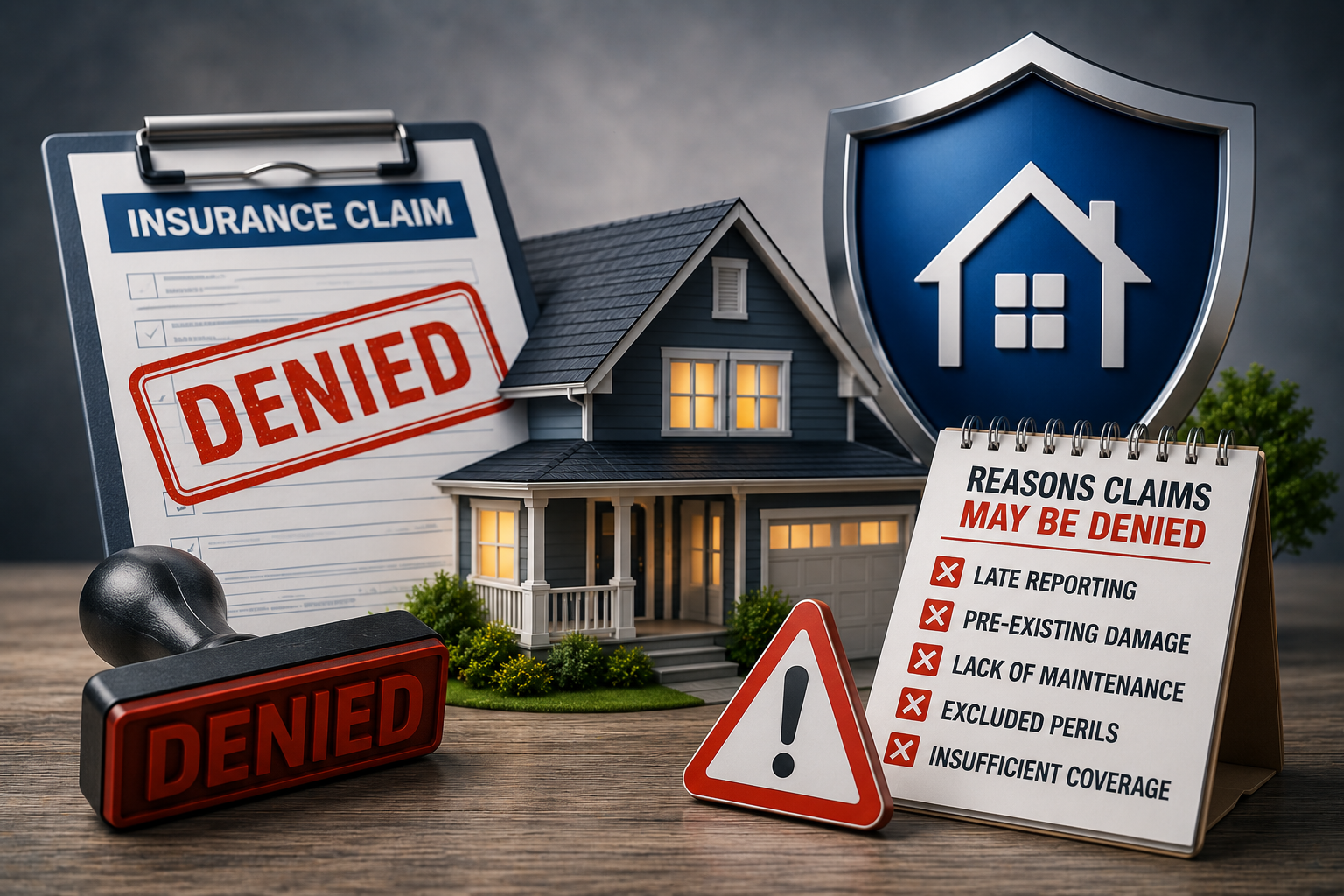
In 2026, the property insurance market is facing unprecedented volatility. As climate risk reshapes the industry, insurers are under mounting pressure to manage operational strain and rising losses. For the average homeowner, this environment has made the process of getting a claim approved more complex than ever. Understanding why insurers deny claims is the first step in protecting your financial security.
Why Insurers Deny Claims
A denial is rarely arbitrary; it is almost always tied to specific language within your policy contract or a failure to meet documentation standards.
1. The Maintenance Gap
Insurers frequently categorize damage as “preventable” rather than accidental. If an investigation reveals that damage, such as a roof leak or structural rot, resulted from long-term neglect rather than a sudden event, the claim is often denied.
2. Coverage Exclusions
Standard homeowners policies (HO-3) are not all-encompassing. The most common “surprises” include:
Flood Damage: Often requires a separate National Flood Insurance Program (NFIP) or private policy.
Earthquake Damage: Frequently excluded from base policies and requires a specific rider.
Sewer Backup: Requires specific endorsements.
3. Documentation Failures
Incomplete or inaccurate records are a leading cause of claim delays and rejections. Insurers rely heavily on evidence to validate the cause and extent of loss. If you cannot provide proof of the property’s condition prior to the damage, your case becomes significantly weaker.
Data Snapshot: The Reality of Claims in 2026
The following table summarizes factors that currently influence claim outcomes and settlement speeds.
Factor
Impact on Claim Approval
Note
Complete Documentation
Highly Positive
Essential for reducing administrative delays.
Credit Score
Indirect
Lower scores are statistically linked to higher claim filing frequency.
Preventative Maintenance
Neutral to Positive
Lack of maintenance is a primary cause for denial.
Policy Clarity
Varies
Even clear policy language can be difficult for consumers to interpret.
The “Credit-Premium Gradient”
A critical trend in 2026 is the relationship between credit scores and insurance outcomes. Research indicates that homeowners with lower credit scores pay higher premiums and are more likely to file claims, partly due to liquidity constraints where filing a claim is the only available way to manage unavoidable expenses. Unfortunately, this cycle can also lead to more frequent legal challenges from insurers regarding the nature of those claims.
How to Protect Your Claim
To minimize the risk of a denied claim, consider the following proactive strategies:
Maintain a Digital Inventory: Use photos and videos to document your home assets annually. This is your primary defense against “actual cash value” disputes.
Keep Maintenance Records: Save receipts for roof repairs, plumbing inspections, and HVAC service. If a pipe bursts, you want to prove the system was well-maintained.
Read the “Declarations Page”: Do not wait for a disaster to discover your coverage gaps. Know exactly what perils are excluded in your contract.
Respond Promptly: Missed deadlines or failure to report a loss in a timely manner can trigger an automatic denial in many jurisdictions.
Frequently Asked Questions
Can I appeal a denied claim?
Yes. If your claim is denied, the insurer is generally required to provide a formal explanation. You should review this against your policy contract. Many insurers have an internal review process that must be completed before you can seek external or legal mediation.
Does my agent’s experience matter?
Data shows that disparities in claim rejection rates can be higher with less experienced agents. Working with a seasoned professional who can guide you through the documentation process is highly recommended.