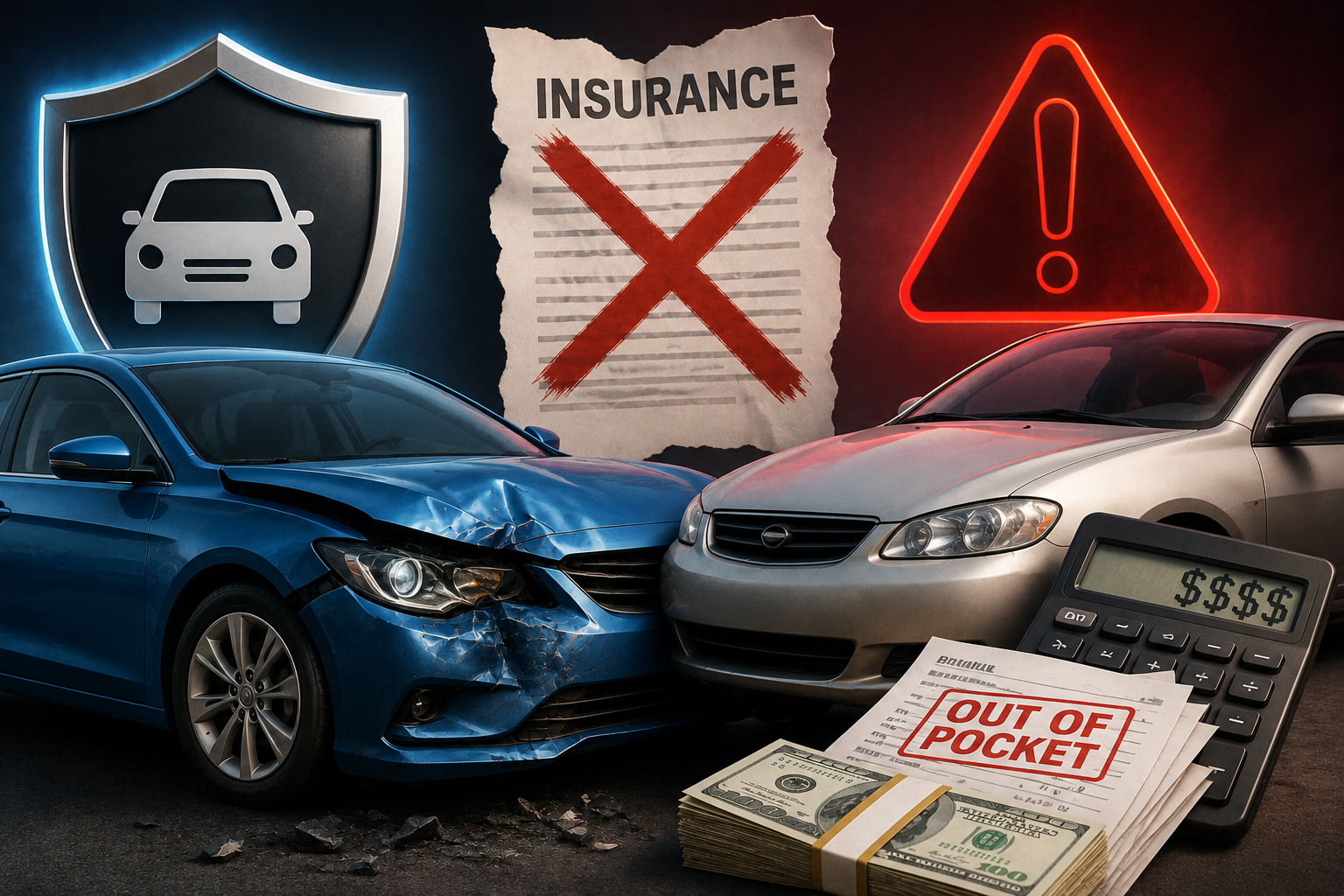
Getting into a car accident is stressful enough, but discovering that the driver who hit you does not have auto insurance transforms a frustrating situation into a major financial hazard. When an uninsured motorist causes a collision, the traditional path of filing a claim against their insurance company disappears, creating a significant coverage gap.
You are left facing a critical problem known in historical legal and economic research as the solvency gap: a scenario where a driver is legally responsible for your damages but lacks the personal wealth or insurance assets to pay for them.
This comprehensive guide covers exactly what happens when an uninsured driver hits your vehicle, how your own insurance coverage steps in, and the specific steps you must take to protect your wallet and your rights.
The Scale of the Uninsured Driver Problem
It is easy to assume that because auto insurance is legally mandated in almost every state, everyone on the road carries a policy. However, the data reveals a different reality. The percentage of uninsured motorists varies dramatically depending on where you drive.
Historically, car owners were affluent individuals capable of paying out of pocket for damages they caused. As vehicles became universal tools of daily life, individuals without substantial assets began driving without matching financial safety nets. Today, despite compulsory liability laws, millions of active drivers skip coverage entirely due to rising premium costs or personal economic distress.
The current macro-economic landscape has compounded this risk. Studies show that premium costs across the broader insurance marketplace have faced sharp upward adjustments. For example, marketplace insurance benchmarks climbed by 21.7 percent recently, fueled by escalating medical costs, labor shortages in repair networks, and structural market uncertainties. When insurance policies become more expensive, a predictable side effect is that a slice of the driving population drops their coverage entirely, expanding the pool of uninsured motorists sharing your daily commute.
Immediate Steps to Take at the Scene of the Accident
If you are involved in an accident and suspect the other driver lacks insurance, the actions you take in the first thirty minutes are vital for your future financial recovery. Treat the incident with the same rigor as any standard accident, but with a heightened focus on gathering documentation.
1. Call the Police Instantly
Always request a police dispatch to the scene, even for seemingly minor collisions. A formal police report provides an objective, third-party record of the event. If the other driver confesses that they do not have an active policy, the responding officer will document this admission, which is essential evidence when processing a claim through your own insurance provider.
2. Document the Scene and Exchange Information
Collect names, phone numbers, driver’s license numbers, and license plate details. If the driver provides an insurance card, write down the policy number and expiration date anyway. Many uninsured drivers carry expired insurance cards to avoid getting ticketed during routine traffic stops. Use your smartphone to take high-resolution photographs of:
The damage to both vehicles from multiple angles.
The relative positions of the cars on the roadway.
The surrounding street signs, traffic lights, and weather conditions.
The other driver’s license and registration documents.
3. Identify Independent Witnesses
Uninsured drivers frequently change their version of events once they leave the scene to avoid legal penalties or license suspension. Speak to bystanders, store owners, or other motorists who witnessed the collision. Collect their names and contact numbers. Their independent testimony can confirm fault, which is a structural requirement for utilizing first-party insurance remedies.
Uninsured Driver Accident Cost Simulator
Simulate your real-world out-of-pocket financial exposure if an uninsured driver totals or damages your car.
Accident & Coverage Parameters
$8,000
$500 (Minor Scraping)$30,000 (Totaled Vehicle)
$5,000
$0 (Uninjured)$25,000 (Severe Injuries)
Pathway A: Minimum Liability Only
Medical Payout (UMBI):$0
Car Repair Payout:$0
Uncovered Medical Liability:$5,000
Uncovered Repair Liability:$8,000
Total Out-of-Pocket Cost:$13,000
Pathway B: Full Coverage + UMBI
Medical Payout (UMBI):$5,000
Car Repair Payout:$7,500
Uncovered Medical Cost:$0
Your Policy Deductible:$500
Total Out-of-Pocket Cost:$500
Important Resource Note: If you are forced to use your own Collision coverage because your state lacks specialized Uninsured Motorist Property Damage (UMPD) laws, your total risk exposure is capped cleanly at your chosen out-of-pocket deductible amount.
How Your Auto Insurance Policy Steps In
When the at-fault driver has no liability coverage to claim against, you must turn to your own auto insurance policy. Your insurance provider handles your initial bills and later attempts to recoup those losses from the uninsured party through a legal process called subrogation.
The primary insurance coverages designed to protect you from an uninsured motorist include:
1. Uninsured Motorist Bodily Injury (UMBI)
UMBI is a form of first-party insurance explicitly created by the insurance industry to close the solvency gap for personal injuries. If an uninsured driver hits you and causes bodily injury, your UMBI coverage pays for medical expenses, rehabilitation costs, and lost wages for you and your passengers.
UMBI behaves like a mirror of the at-fault driver’s missing liability policy. It is a tort-related coverage, meaning your insurance company will only pay out if you can prove that the uninsured driver was entirely at fault for the crash.
2. Uninsured Motorist Property Damage (UMPD)
While UMBI covers your physical injuries, UMPD is designed to cover the physical damage to your vehicle. However, UMPD availability is highly fractured across the United States. Many jurisdictions do not mandate UMPD, or they place strict caps and mandatory deductibles ranging from $100 to $300 on these claims. In states where UMPD is unavailable, you cannot use your uninsured motorist coverage to fix your car.
3. Collision Coverage
If your state does not offer UMPD, or if you opted out of it, your standard Collision Coverage is the primary tool used to repair your vehicle. Collision coverage pays to fix your car regardless of who caused the accident.
The main drawback of using collision coverage instead of UMPD is the deductible. You must pay your out-of-pocket deductible (typically $500 or $1,000) before your insurer pays the remainder of the repair shop invoice.
4. Personal Injury Protection (PIP) and Medical Payments (MedPay)
In no-fault insurance states, your initial medical bills are automatically routed through your own PIP or MedPay coverage, meaning the insurance status of the other driver does not delay your immediate medical treatments. PIP covers medical bills, psychiatric recovery, and essential service replacement without requiring you to prove who caused the accident.
Primary First-Party Coverage Features
Coverage Type
What It Specifically Covers
Requires Proof of Fault?
Subject to Deductibles?
UMBI
Medical bills, lost wages, and pain and suffering for injuries
Yes, the uninsured driver must be at fault
No, generally deductible-free
UMPD
Vehicle repairs and physical property destruction
Yes, requires clear allocation of fault
Yes, often a small statutory deductible
Collision
Vehicle repairs or actual cash value payout if totaled
No, pays out regardless of fault allocations
Yes, your chosen policy deductible applies
PIP / MedPay
Direct immediate medical expenses and lost wages
No, functions as a pure no-fault framework
Varies based on state policy selections
Real-World Financial Impact: A Cost Breakdown Scenario
To understand how these coverage mechanics apply to your personal finances, let’s look at a realistic scenario. Imagine an uninsured driver runs a red light and broadsides your sedan.
The collision causes $8,000 in vehicle damage and leaves you with $5,000 in emergency room medical bills. The table below compares your financial exposure based on whether you have a basic, state-minimum liability policy versus a comprehensive policy loaded with first-party protections.
Financial Exposure Comparison
Cost Element
Pathway A: State-Minimum Policy Only
Pathway B: Policy with Collision and UMBI
Emergency ER Medical Bills
$5,000
$5,000
Vehicle Repair Invoice
$8,000
$8,000
UMBI Coverage Payout
$0 (No policy asset exists)
$5,000 (Insurer covers medical cost)
Collision Coverage Payout
$0 (Liability policies do not fix your car)
$7,500 (Insurer pays repair invoice minus deductible)
Your Out-of-Pocket Deductible
$0
$500 (Assumes standard collision deductible)
Uncovered Medical Expenses
$5,000
$0
Total Immediate Out-of-Pocket Cost
$13,000
$500
Interactive Cost Simulator Widget
Use this interactive tool to simulate your financial risk. Adjust the parameters to see how deductibles, vehicle damage, and medical bills interact when an uninsured driver hits your vehicle.
Can You Sue the Uninsured Driver Individually?
When an insurance payout is unavailable or falls short, a common question is whether you can sue the at-fault driver in court. Legally, the answer is yes. You have the right to file a lawsuit against a negligent driver to obtain a judgment for your property damage and medical expenses.
However, the practical reality of doing so rarely works out in your favor. Most people who drive without auto insurance do so because they are facing severe financial difficulties and lack assets. In the legal profession, these individuals are considered judgment proof.
Even if you hire an attorney and successfully win a court judgment against them, there are no insurance funds or significant bank accounts available to collect. You may end up spending thousands of dollars on legal fees and court costs only to hold an unenforceable piece of paper.
State Regulatory Defenses: What Happens to the Uninsured Driver?
While recovering money directly from an uninsured driver is difficult, state regulatory systems impose strict punitive measures to discourage driving without insurance. Following an accident, state departments of motor vehicles and law enforcement typically initiate several enforcement mechanisms:
Mandatory License and Registration Suspension: Most states will immediately suspend the driver’s license and vehicle registration of an uninsured motorist involved in a crash. They cannot regain their driving privileges until they pay restitution or agree to a court-approved installment payment plan.
SR-22 Financial Responsibility Filings: To reinstate their license, the state will require the driver to have their insurance company file an SR-22 certificate. This is a document proving they carry the necessary state-minimum liability coverage. It flags them as high-risk, causing their future auto premiums to skyrocket.
Vehicle Impoundment and Fines: Police officers can impound an uninsured vehicle at the scene of an accident. The driver must pay heavy administrative fines, towing costs, and storage fees out of pocket before the vehicle is released.
Action Plan: How to Protect Yourself Before an Accident Occurs
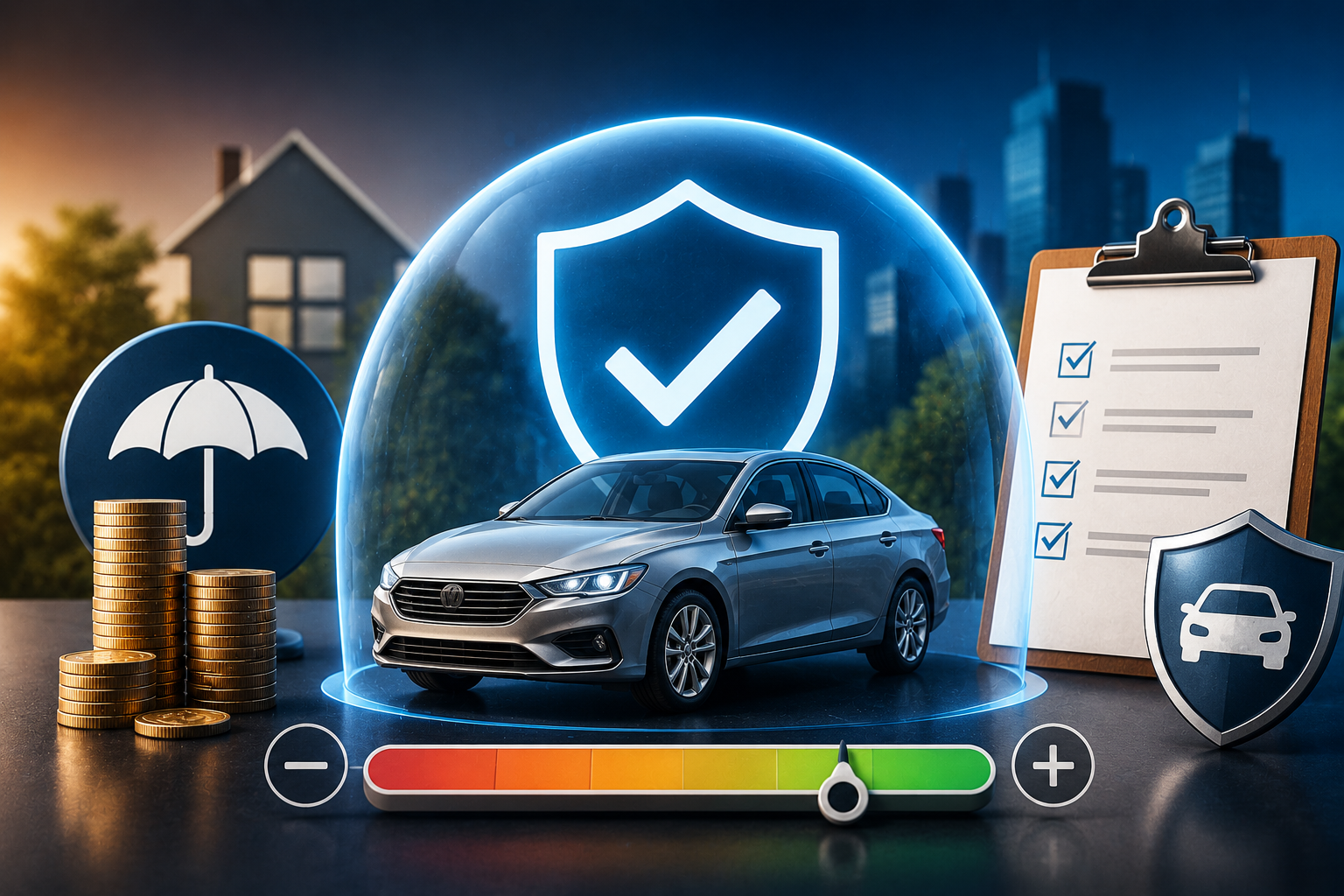
Because you cannot control who shares the road with you, the best strategy is to insulate your personal finances from the mistakes of irresponsible drivers. Use this checklist to review your current auto policy:
Audit Your Policy Declarations Page: Do not guess whether you have uninsured motorist coverage. Look closely at your policy declaration page for line items labeled UMBI and UMPD.
Match Your Liability Limits: A common mistake is buying the lowest allowable uninsured motorist limits to save a few dollars on monthly premiums. Ensure your UMBI limits match your primary bodily injury liability limits (e.g., 100k per person / 300k per accident).
Keep Your Collision Coverage Active: If your vehicle has significant market value, keep collision coverage active on your policy. If you are hit by an uninsured driver in a state without UMPD, your collision coverage is often your only tool to avoid a complete financial loss.
Understanding how these distinct coverages operate allows you to make informed decisions before an accident occurs, keeping unexpected out-of-pocket costs to an absolute minimum.