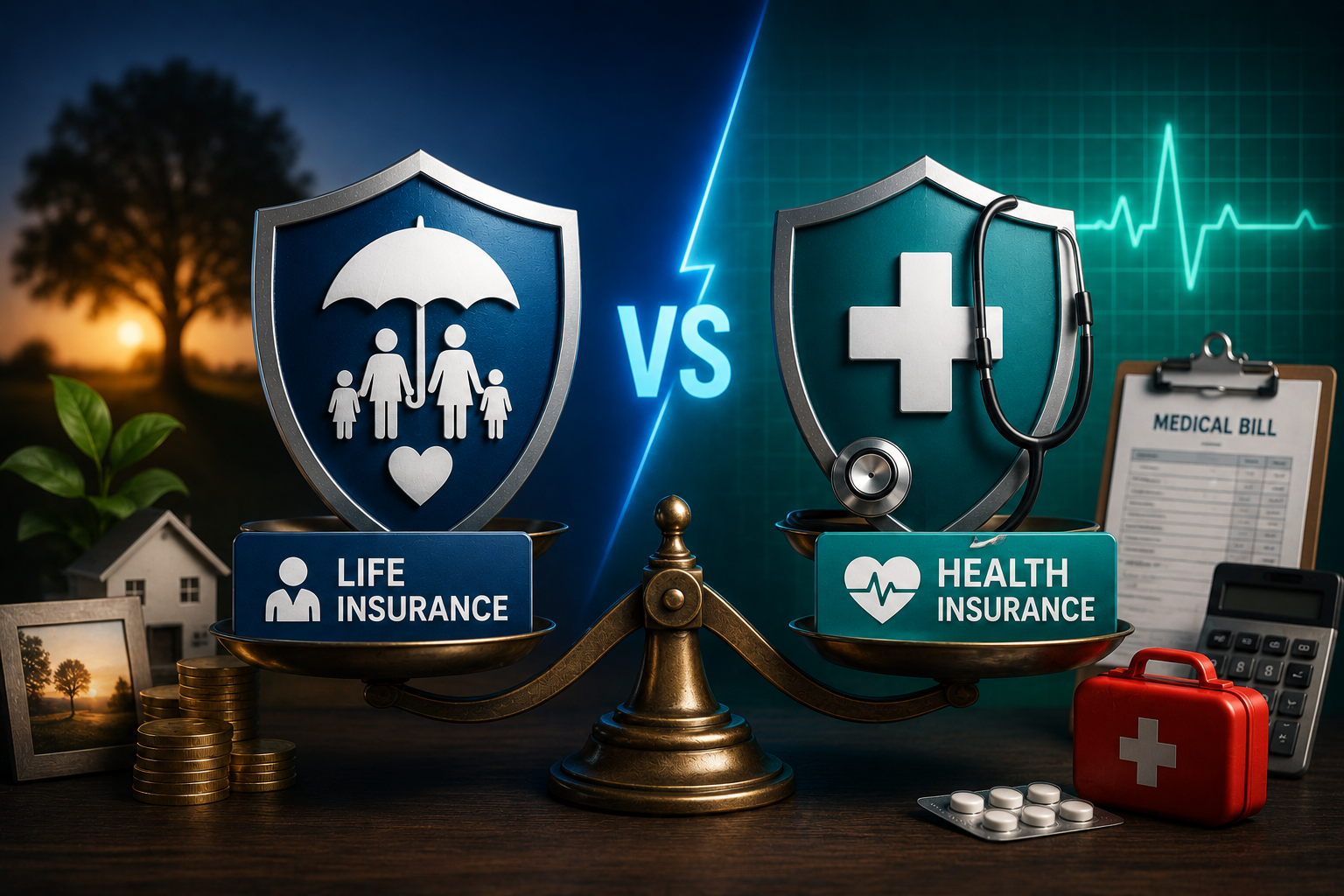
When building a comprehensive personal finance strategy, selecting the right protective cushions can feel overwhelming. Among the most frequent points of confusion for consumers is differentiating between individual life insurance and comprehensive health insurance. Because both policies belong to the broader insurance sector and use medical underwriting variables, many people mistakenly assume that having one fulfills the need for the other.
This misunderstanding can lead to severe financial vulnerability. A standard health policy will not pay off a mortgage if a breadwinner passes away, just as a standard term life policy provides no financial relief when facing an unexpected emergency room bill.
Driven by recent shifts in global healthcare systems, understanding these asset classes is more critical than ever. Global medical inflation rates have escalated dramatically, with projections highlighting a 10.3% average surge in global medical costs, forcing insurers to adjust premium metrics worldwide. At the same time, lifestyle linked life products are gaining massive traction as consumers demand more flexible protection models.
Let’s break down the foundational differences between life and health insurance, examine their underlying payout mechanisms, and map out a balanced allocation strategy for your household budget.
Dual-Insurance Budget Optimizer
Balance your monthly health coverage priorities against your long-term life insurance income replacement goals to find your ideal financial safety net allocation.
1. Protection Parameters
Set the absolute maximum dollar amount you want to spend on combined insurance premiums.
Different network tires drastically change your baseline medical premium footprint.
The target level-term lump sum benefit pool reserved for financial dependents.
2. Budget Allocation Diagnostics
Monthly Financial Runway Status
Calculating Balance…
Est. Health Premium
$0.00
Est. Life Premium
$0.00
Premium Allocation Split
Health Coverage (50%)
Life Coverage (50%)
Strategic Advisory Brief
Awaiting initialization…
The Core Concept: Risk Mitigation vs. Asset Preservation
To understand the difference between these two policy types, you must look at their core financial purposes.
Health insurance operates as a risk mitigation tool designed to manage active, living medical expenses. It provides continuous, transactional insulation against the immediate costs of staying alive and healthy, such as surgeries, prescription medications, doctor visits, and emergency care.
Life insurance functions as an asset preservation and income replacement mechanism. It is designed to mitigate the financial consequences of mortality. It ensures that if your income suddenly disappears due to an untimely passing, your dependents possess the liquid capital required to maintain their standard of living, erase outstanding debts, and fund long term goals like college tuition.
This structural separation explains why both segments are growing independently. According to industry data, health insurance expanded by 12.3% globally, driven by rising clinical treatment expenses. Meanwhile, life insurance remains the single largest sector by gross written premium worldwide, as families continue to prioritize long term wealth preservation.
Evaluating the exact parameters of how these two distinct insurance lines operate reveals that they share very little overlap in their everyday utility.
Functional Dimension
Comprehensive Health Insurance
Individual Life Insurance
Primary Insured Event
Sickness, accidental injury, chronic disease management, and preventative healthcare services.
The natural or accidental passing of the designated policyholder.
Typical Payout Beneficiary
The healthcare provider, medical facility, or the policyholder via direct reimbursement.
Designated loved ones, family dependents, business partners, or corporate estates.
Payment Frequency & Flow
Continuous, recurring claims processed throughout the policy year.
A singular, lump sum death benefit payout distributed upon the closure of the policy.
Premium Structure Stability
Volatile; premiums typically adjust annually based on regional medical inflation and care utilization.
Highly predictable; level term policies guarantee a fixed monthly cost that never changes.
Policy Duration & Longevity
Annually renewable contracts that require active maintenance to prevent termination.
Temporary term lengths (10 to 30 years) or permanent lifelong coverage.
Understanding Current Market Dynamics
Navigating insurance options requires looking at the current economic landscape. The broader insurance market is moving away from static, rigid policies in favor of highly customized, digital options.
The Realities of Modern Health Inflation
If your monthly healthcare costs feel heavier than they used to, you are experiencing a documented global structural shift. Commercial medical cost trends have risen significantly, forcing employers and individual buyers to navigate a 6.5% to 9% spike in premium baselines.
This pricing pressure is driven by several compounding factors: the rapid introduction of high cost specialty medications, increased utilization of advanced robotic surgeries, and supply chain disruptions affecting medical equipment logistics.
As a result, health insurance carriers are shifting from “all inclusive” plan architectures to shared cost frameworks. This means consumers are seeing higher deductibles, strict prior authorization requirements, and structured co payments designed to control rising premium expenses.
The Evolution of Living Life Benefits
Concurrently, the life insurance sector is undergoing its own transformation to appeal to younger, tech savvy consumers. Historically viewed as a passive, legacy asset, modern life insurance is increasingly utilized as an active financial tool.
Over 40% of policyholders under the age of 40 now prioritize life insurance policies that include living benefits. These modern options feature accelerated death benefit riders that allow policyholders to access a portion of their death benefit early if they face a chronic, critical, or terminal medical diagnosis.
This structural crossover highlights a growing consumer demand for versatile financial protection that addresses both health crises and estate security.
Financial Analysis: How to Balance Your Insurance Allocation
Because life and health insurance serve entirely different purposes, building a secure financial plan means budgeting for both rather than choosing between them. Use this three step checklist to optimize your coverage layout:
Step 1: Secure Your Health Insurance Foundation First
Medical emergencies can strike at any time, and an unexpected, five figure hospital bill can quickly derail your savings goals. Always prioritize establishing a baseline health insurance plan. If you are employed, maximize your workplace group plans. If you are self employed, explore health savings account (HSA) eligible plans to manage your routine care costs with tax advantaged dollars.
Step 2: Layer Level Term Life Insurance for Income Replacement
Once your health coverage is locked in, evaluate your life insurance needs by analyzing your outstanding financial obligations. Multiply your active annual income by 10 to 12 times to establish a target baseline for your death benefit. Opting for a level term life policy while you are young and healthy allows you to lock in a low, fixed monthly premium that remains completely unchanged for decades.
Step 3: Run Scenario Models to Tailor Your Strategy
Before signing any new policy contracts, run your numbers through an interactive scenario planner. Adjusting your target protection limits and examining premium allocations helps ensure your total insurance costs remain sustainable for your monthly household budget.
Summary and Next Steps
Life insurance and health insurance are not competing products; they are complementary pillars of a balanced financial strategy. Health insurance manages the predictable and unpredictable costs of medical care throughout your lifetime, while life insurance stands guard to protect your family’s future financial security if you are no longer there to provide for them.
Take the time to audit your active policies today, model your premium distributions using an interactive planning calculator, and design a balanced protection plan that gives your family true peace of mind.