The world of auto insurance is undergoing a massive digital shift. While tech advancements have made it easier to file a claim in minutes using a smartphone app, they have also opened the door to a highly sophisticated, invisible threat: AI-powered insurance fraud.
For everyday drivers, this is not just an industry problem or a corporate headache. It is a direct threat to your wallet, your legal status, and your digital identity.
As fraudsters weaponize artificial intelligence to fabricate car accidents, doctor vehicle damage, and clone identities, everyday policyholders are left paying the bill through record-high premiums.
This deep dive breaks down what AI insurance fraud looks like, how it impacts everyday drivers, and what you must do to protect yourself.
What is AI Insurance Fraud?
Historically, car insurance fraud required physical effort. Criminals staged accidents (“crash-for-cash” rings), intentionally backed into vehicles, or convinced corrupt body shops to inflate repair bills.
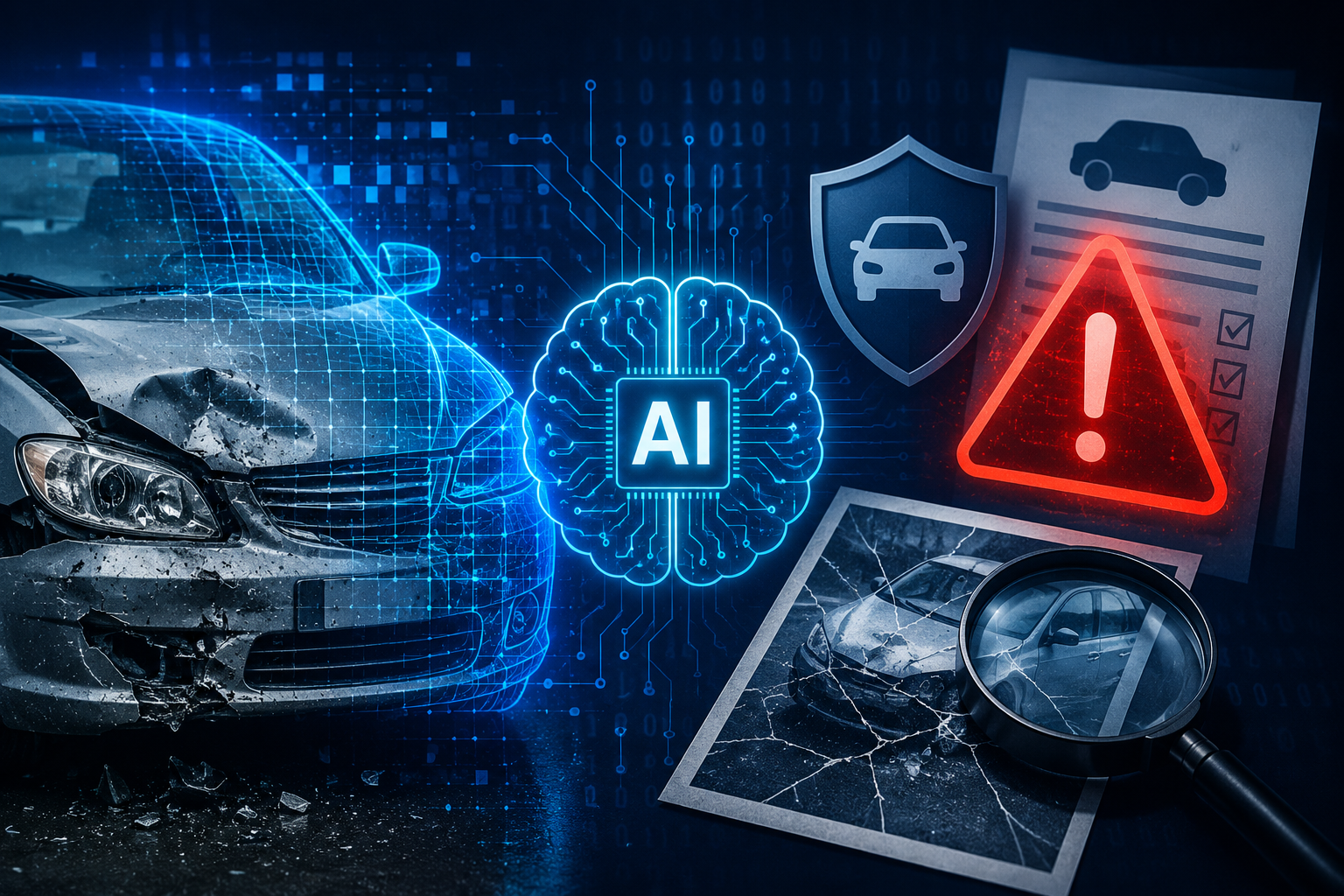
Today, generative AI allows bad actors to execute massive fraud rings right from a laptop. By using deep learning algorithms, Generative Adversarial Networks (GANs), and accessible image editors, fraudsters can create hyper-realistic fake evidence that bypasses traditional anti-fraud filters.
The Core Tactics Used by Digital Fraudsters
Deepfake and “Cheapfake” Damage Photos: Scammers take a photo of an entirely undamaged car and use generative AI to add a shattered windshield, a dented bumper, or severe side-impact damage. Alternatively, they use “cheapfakes” (low-tech digital manipulations) to exaggerate minor scratches into total-loss claims.
Synthetic Identity Theft: Criminals mix stolen data from real people with AI-generated text and profiles to create “ghost” drivers. They use these fake personas to buy policies, stage digital accidents, and collect payouts.
Fabricated Documentation: Using advanced language models, scammers churn out flawless, authentic-looking medical reports, police paperwork, towing receipts, and body shop invoices.
Voice and Video Manipulation: Fraudsters use voice-cloning technology to mimic legitimate policyholders, authorizing claim payouts or altering policy details over the phone without the owner’s knowledge.
The Scale of the Crisis: The Shocking Data
The numbers behind this emerging threat show why insurance companies are shifting to a state of high alert. Major global insurers are reporting unprecedented spikes in digital manipulation.
The issue is worsened by the industry’s push toward “touchless claims”. To make processing faster, many companies use automated mobile apps that let you upload pictures of a fender bender and get paid via direct deposit within hours. While convenient, these automated pipelines are prime targets for AI exploitation.
Real-World Cases: How Scammers Exploit AI Today
The threat is no longer theoretical. Recent data from international fraud investigations showcases the creative, alarming ways criminals use artificial intelligence to beat the system.
1. The Social Media “Scrape and Scratch”
In a case highlighted by insurance investigators, a fraud ring scraped public social media profiles to find images of pristine commercial vans. They downloaded a target image, used a generative AI tool to add a cracked frame and broken taillights, and paired it with a matching, fake digital invoice for $1,200. The entire claim was submitted digitally. It was only caught when a human auditor ran a reverse-image search and located the original, untouched photo on the vehicle owner’s business page.
2. Multi-Carrier “Ghost” Networks
In Canada, the Équité Association uncovered automated fraud rings using AI-driven systems to scale operations across multiple carriers simultaneously. Instead of filing a single false claim, the network used synthetic identities to submit the exact same AI-generated vehicle damage photo to four different insurance companies under different names, attempting to collect four separate payouts for a single, non-existent accident.
Why Honest Drivers Are the Ones Paying the Price
It is easy to assume that insurance fraud only hurts billion-dollar corporations. However, the economics of insurance dictate that insurance fraud directly impacts everyday drivers.
1. Skyrocketing Premium Inflation
Insurance companies are businesses that operate on risk pooling. When payouts spike due to multi-million-dollar AI fraud operations, insurers maintain their profit margins by raising premiums for everyone. As noted in the data table above, the massive surge in tech-fueled fraud adds roughly $700 per year to the average family’s auto insurance policy.
2. The Danger of “Ghost Broking”
A rising scam targeting younger or lower-income drivers is Ghost Broking. Fraudsters use AI to design fake insurance websites or social media ads, offering heavily discounted “exclusive” policies. They collect your money, use AI document builders to generate a highly convincing insurance certificate, and leave you driving completely uninsured. If you get into an accident, you discover your policy does not exist, leaving you personally liable for damages and facing legal penalties.
3. Extended Claim Delays
Because digital fakes are so difficult to spot, insurance companies are forced to roll back instant, automated approvals. Genuine claims filed by honest drivers are now facing extra layers of manual review, forensic analysis, and mandatory phone interviews. A process that used to take 48 hours can now take weeks while specialized units check the metadata and pixel structure of your photos.
How the Insurance Industry is Fighting Back
Insurers are not sitting idly by. They are fighting fire with fire, using highly advanced defensive AI to catch criminal algorithms.
Interactive Consumer Insurance Toolkit
Select a tab below to simulate out-of-pocket medical costs, uninsured accident liabilities, dashcam savings, or synthetic AI fraud impacts.
Network Parameters
$10,000
$1,500
50%
In-Network Track
Allowed Amount:$5,000
Coinsurance (20%):$700
Total Out-of-Pocket:$2,200
Out-of-Network Track
Insurance Basis:$5,000
Coinsurance (50%):$1,750
Balance Billing Invoice:$5,000
Total Out-of-Pocket:$8,250
Accident Variables
$8,000
$5,000
Minimum Liability Plan Only
Uncovered Car Repairs:$8,000
Uncovered Medical Bills:$5,000
Total Financial Out-of-Pocket:$13,000
Full Coverage + UMBI Policy
Insurance Payout Coverage:$12,500
Your Direct Deductible Cost:$500
Total Financial Out-of-Pocket:$500
Surcharge Parameters
$2,000
47%
Without Video
$3,320
With Dashcam
$150
Calculating total long-term hardware ROI profile…
Digital Habits Analysis
$1,800
Your Hidden Annual “Fraud Tax”
$216
Embedded margin cost absorbed by consumers to balance cross-industry synthetic identity loops.
Profile Vulnerability Status
SECURE
To block these scams before payouts occur, the Insurance Fraud Bureau (IFB) and tech forward carriers are deploying a few primary tools:
Image Forensics & Computer Vision: Specialized anti-fraud AI scans incoming images to check for lighting anomalies, missing metadata, mismatched shadow angles, and pixel compression patterns that reveal digital tampering.
Graph AI and Network Analysis: This technology maps thousands of claims simultaneously across different insurers. It flags variables like matching phone numbers, overlapping digital addresses, or reused damage photos across separate claims.
Liveness Verification: When submitting a claim via an app, users may have to take real-time, streaming video of the vehicle damage through a secure, built-in camera tool rather than uploading stored camera-roll photos. This process creates a tamper-proof digital fingerprint.
Step-by-Step Guide: How Drivers Can Protect Themselves
As a vehicle owner, you must take proactive steps to safeguard your identity, your insurance record, and your finances from these high-tech scams.
1.Secure Your Vehicle Records and VIN: Immediate Priority.
Never post clear photos of your car’s Vehicle Identification Number (VIN), license plate, or registration documents online. Fraudsters scrape public forums and social media marketplace listings to find real vehicle details to build synthetic identities or back up fake claims.
2.Document Accident Scenes Extensively: At the Scene.
If you are involved in an accident, do not just take two or three close-up photos of the damage. Take wide-angle, panoramic videos of the entire scene, including surrounding landmarks, street signs, weather conditions, and the other driver’s vehicle layout. This extensive, contextual visual evidence makes it impossible for the other party to use AI to inflate the damage scale later.
3.Verify Your Insurance Broker: Before Buying a Policy.
When looking for a new auto policy, stay far away from deals on social media platforms or messaging apps. Always verify that an agent or broker is licensed through your state or national regulatory database (such as the National Association of Insurance Commissioners in the US). Always purchase coverage directly through a verified, secure corporate portal.
4.Monitor Your Claims History: Bi-Annually.
Regularly review your Comprehensive Loss Underwriting Exchange (C.L.U.E.) report or your carrier’s digital dashboard. If an AI fraud ring has used your leaked data or VIN to file a fake claim, it will show up on your history, spiking your rates even if you have never had an accident. Report any unknown activity to your carrier immediately.
Final Thoughts: Navigating the Synthetic Claims Era
AI insurance fraud is a clear reminder that technology is a double-edged sword. The convenience of instant, app-based claims processing has created an environment where digital deception can thrive if left unchecked.
By maintaining strict control over your vehicle data, carefully documenting real road incidents, and confirming your coverage directly with established providers, you can protect your financial stability and prevent digital scammers from driving up your cost of car ownership.