A pet insurance waiting period is the time you must wait after buying a policy before you can actually file a claim. Get this wrong and a brand new puppy’s first vet visit could be denied. Here is what matters most for 2026.
Standard waiting periods across major carriers run roughly 0 to 14 days for accidents, 14 days for illness, and 14 days to 6 months for orthopedic conditions like hip dysplasia or cruciate ligament tears.
In 2026, a fast growing list of states, now including California, Florida, Ohio, Pennsylvania, Louisiana, New Jersey, Delaware, Maine, Maryland, Mississippi, Nebraska, New Hampshire, Vermont, and Washington, restrict or ban accident waiting periods under laws based on the NAIC Pet Insurance Model Act.
Florida’s HB 655, effective January 1, 2026, bans waiting periods for accidents outright and forces insurers to disclose claim evaluation rules, exam requirements, and pre-existing condition standards in plain language.
New Jersey passed its own Pet Insurance Act in January 2026, with a compliance deadline of January 1, 2027, joining the wave of states tightening disclosure and waiting period rules.
The single biggest mistake pet owners make is enrolling after a symptom already appeared. Enroll while your pet is healthy, since the clock only protects you if it runs out before you need it.
A waiting period is the span of time between the day your pet insurance policy starts and the day you can actually submit a claim for reimbursement. You pay your premium from day one, but the insurer will not pay out for anything that happens during this window. Once the waiting period passes, your coverage becomes fully active for the categories that have cleared.
This single detail trips up more new pet owners than any other part of a policy. Buying insurance the same week your puppy starts limping does not help, because almost every illness and orthopedic waiting period will still be running when the vet bill arrives.
Accidents
0-14
Days, shortest wait, often waived in regulated states
Almost every pet insurance policy splits waiting periods into three categories, and the length of each one matters far more than most buyers realize when comparing quotes.
Accident waiting period
Covers things like swallowed objects, broken bones, bite wounds, and car accidents. This is typically the shortest wait, ranging from zero days at carriers like Lemonade in most states to about 14 days at more conservative insurers like Spot. A growing number of states now ban accident waiting periods entirely.
Illness waiting period
Covers conditions like ear infections, urinary tract infections, vomiting, and upper respiratory infections. Almost every major carrier still applies a standard 14 day illness wait, since this is the category most exposed to people buying coverage right after their pet shows symptoms.
Orthopedic or breed-specific waiting period
Covers conditions like hip dysplasia, cruciate ligament tears, and luxating patella, which are common in large breed dogs and develop gradually. This wait runs the longest, from 14 days at some carriers to a full 6 months at others, though several regulated states now cap orthopedic waits at 30 days.
Waiting periods vary by state due to new disclosure and consumer protection laws, so treat the figures below as general benchmarks rather than guarantees. Always confirm exact terms for your state and breed before purchasing.
Typical 2026 waiting periods for major U.S. pet insurance carriers (national averages, check your state)
Carrier
Accident wait
Illness wait
Orthopedic wait
Lemonade
None in most states
14 days
30 days (6 months for hip dysplasia)
Embrace
None
14 days
6 months (waivable with vet exam)
MetLife
Midnight after enrollment
14 days
6 months
Spot
14 days
14 days
14 days
ASPCA
14 days
14 days
14 days
Pumpkin
14 days
14 days
14 days
Trupanion
5 days
30 days
30 days
Nationwide
14 days
14 days
6 months (cruciate ligament)
Sources: published carrier policy documents and MoneyGeek 2026 carrier comparison, current as of mid 2026. Waiting periods are subject to change and may differ by state due to new regulation.
Orthopedic waiting periods show the widest spread of any category, from 14 days at some carriers to a full 180 days (6 months) at others. This is the single most important number to compare for large breed puppies prone to hip or joint issues.
It is easy to confuse these two concepts, but they work differently and both can sink a claim. A waiting period is purely about timing. A pre-existing condition exclusion is about whether a condition existed, or showed symptoms, before your coverage began, and it never expires the way a waiting period does.
Waiting period
Based purely on elapsed time since enrollment
Ends automatically once the clock runs out
Applies to new conditions that appear after enrollment
Different lengths for accidents, illness, and orthopedic issues
Pre-existing condition
Based on whether symptoms existed before the policy started
Can last for the life of the policy, with no expiration
Some curable conditions may become eligible again after a symptom-free period
Chronic conditions like diabetes or allergies are typically permanent exclusions
Curable pre-existing conditions can sometimes be covered later
Several insurers, including Embrace and Spot, will reconsider certain curable conditions, such as ear infections, urinary tract infections, vomiting, or minor sprains, if your pet stays symptom free and treatment free for a set period, often 6 to 12 months. Conditions considered incurable, like cancer, diabetes, or allergies, are generally excluded permanently once diagnosed before enrollment.
Here is how the waiting periods play out across a single policy’s first six months, using a hypothetical mid-range carrier with a 2 day accident wait, 14 day illness wait, and 6 month orthopedic wait.
Scenario: Max, an 8-week-old Labrador puppy
Day 1: Policy purchased and first premium paid. No coverage active yet for any category.
Day 3: Accident coverage activates. If Max swallows a sock today, the surgery is covered.
Day 9: Max develops a mild upper respiratory infection. Since illness coverage does not activate until day 14, this visit is paid out of pocket and not reimbursed.
Day 15: Illness coverage is now fully active. A second infection or any new illness from this point forward is eligible for reimbursement.
Month 4: Max starts limping slightly. Since orthopedic coverage does not activate until month 6, an X-ray showing early hip dysplasia symptoms at this point could later be classified as pre-existing once the orthopedic wait does clear, since the symptom was documented before the waiting period ended.
Month 6 and beyond: All three categories are fully active. Max is now comprehensively covered for new accidents, illnesses, and orthopedic conditions going forward.
This example is exactly why veterinarians and insurers both recommend enrolling puppies and kittens as early as possible, ideally before any symptom of a breed-prone condition has a chance to appear in their medical record.
6. 2026 News: States Are Cracking Down on Waiting Period Abuse
The biggest pet insurance story of 2026 is the rapid spread of state level regulation built on the National Association of Insurance Commissioners Pet Insurance Model Act. For years the industry operated with little oversight, and confusing waiting periods, vague pre-existing condition definitions, and surprise claim denials were common complaints. That is changing fast.
What changed in 2026
As of early 2026, more than a dozen states have adopted Model Act based protections, including California, Delaware, Florida, Louisiana, Maine, Maryland, Mississippi, Nebraska, New Hampshire, Ohio, Pennsylvania, Vermont, and Washington. These laws commonly prohibit waiting periods for accidents outright, or cap them at midnight following enrollment, and limit orthopedic waiting periods to 30 days or less in many cases.
Florida’s contribution is House Bill 655, which took effect January 1, 2026. The law requires pet insurers to clearly disclose how claims are evaluated and paid, whether medical exams are required, and how pre-existing conditions are determined. Insurers can still deny claims tied to pre-existing conditions, but they now carry the burden of proving the condition existed before coverage began, rather than relying on vague chart notes. The law also explicitly bans waiting periods for accidents and adds a free look cancellation window that lets new policyholders review and return a policy within a set timeframe.
New Jersey followed with its own Pet Insurance Act, passed in January 2026 with a compliance deadline of January 1, 2027, joining a growing list of states including New York, Hawaii, Illinois, Massachusetts, and Rhode Island that have similar legislation pending. The trend signals that plain language disclosure requirements and waiting period limits are likely to keep expanding state by state through 2027.
What this means if you are shopping for a policy in 2026
Check whether your state has adopted Model Act style protections before assuming national waiting period figures apply to you. A carrier’s nationally advertised 14 day illness wait might be shorter where state law caps it, and an accident wait some carriers still apply in unregulated states may be fully banned where you live. Always read the actual policy schedule for your specific state rather than relying on marketing pages.
Enroll before any symptom appears. The single most reliable way to make a waiting period a non-issue is to start the clock while your pet is completely healthy.
Choose a carrier with shorter waits if your pet is older or higher risk. If your dog is already 6 years old, a carrier with a 30 day orthopedic wait protects you sooner than one with a 6 month wait.
Ask about a transfer waiver. Some insurers will waive or shorten a waiting period if you are switching from another active pet insurance policy without a coverage gap, since this reduces the risk of someone gaming the system.
Get a vet exam when required. A handful of carriers will waive certain orthopedic waiting periods if a veterinarian confirms in writing that your pet currently shows no signs of the condition.
Check your state’s specific rules. If you live in one of the growing list of regulated states, your accident wait may already be zero or close to it by law, regardless of what the carrier advertises nationally.
Waiting periods are not designed to punish pet owners. They exist to prevent a specific type of fraud called adverse selection, where someone waits until their pet is already sick or injured and then buys a policy specifically to cover a bill they already know is coming. Without a waiting period, this practice would be financially impossible for insurers to sustain, since premiums are priced on the assumption that most policyholders enroll while healthy.
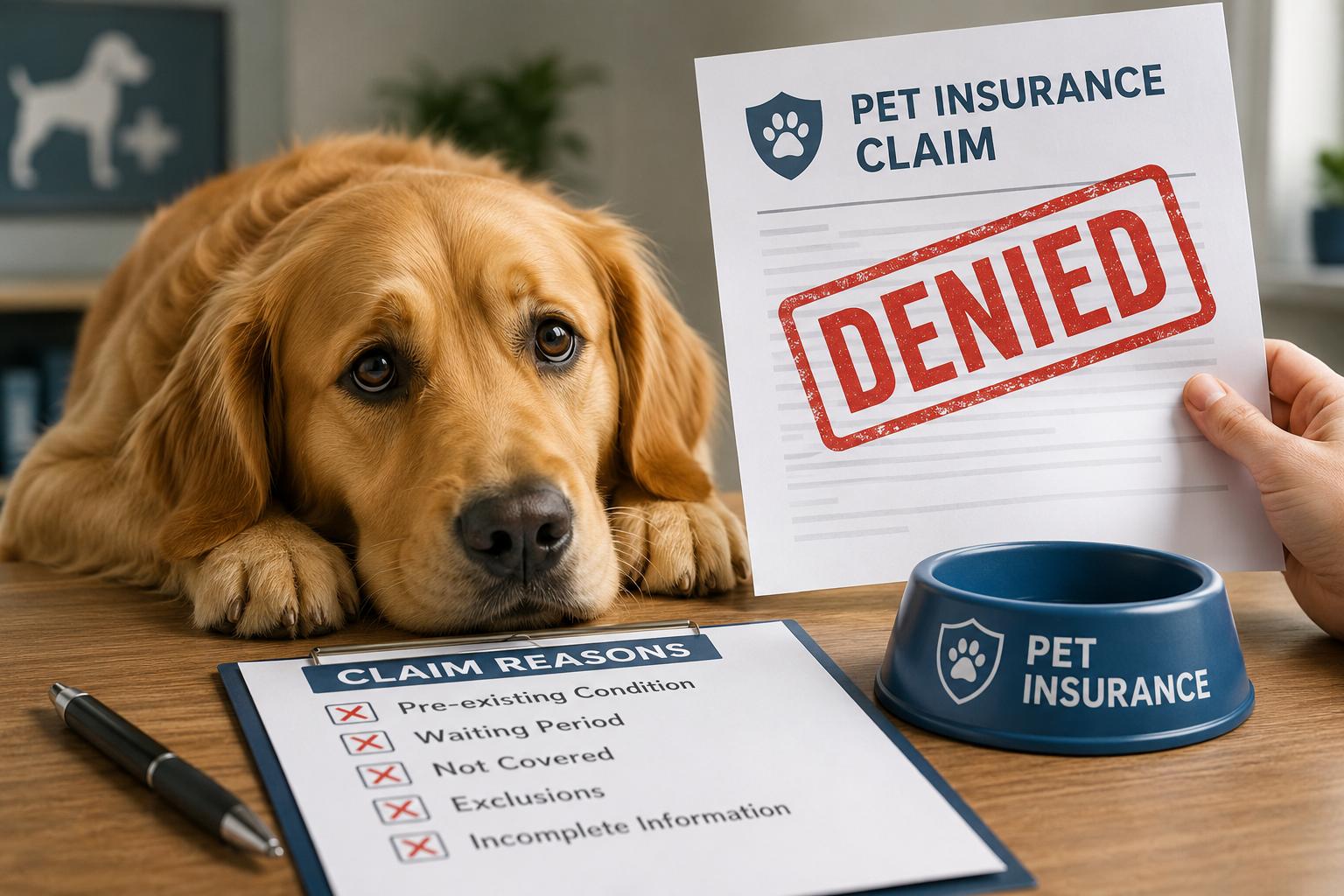
Most claim denials related to timing fail at the first gate, the waiting period check, before a pre-existing condition determination is even considered.
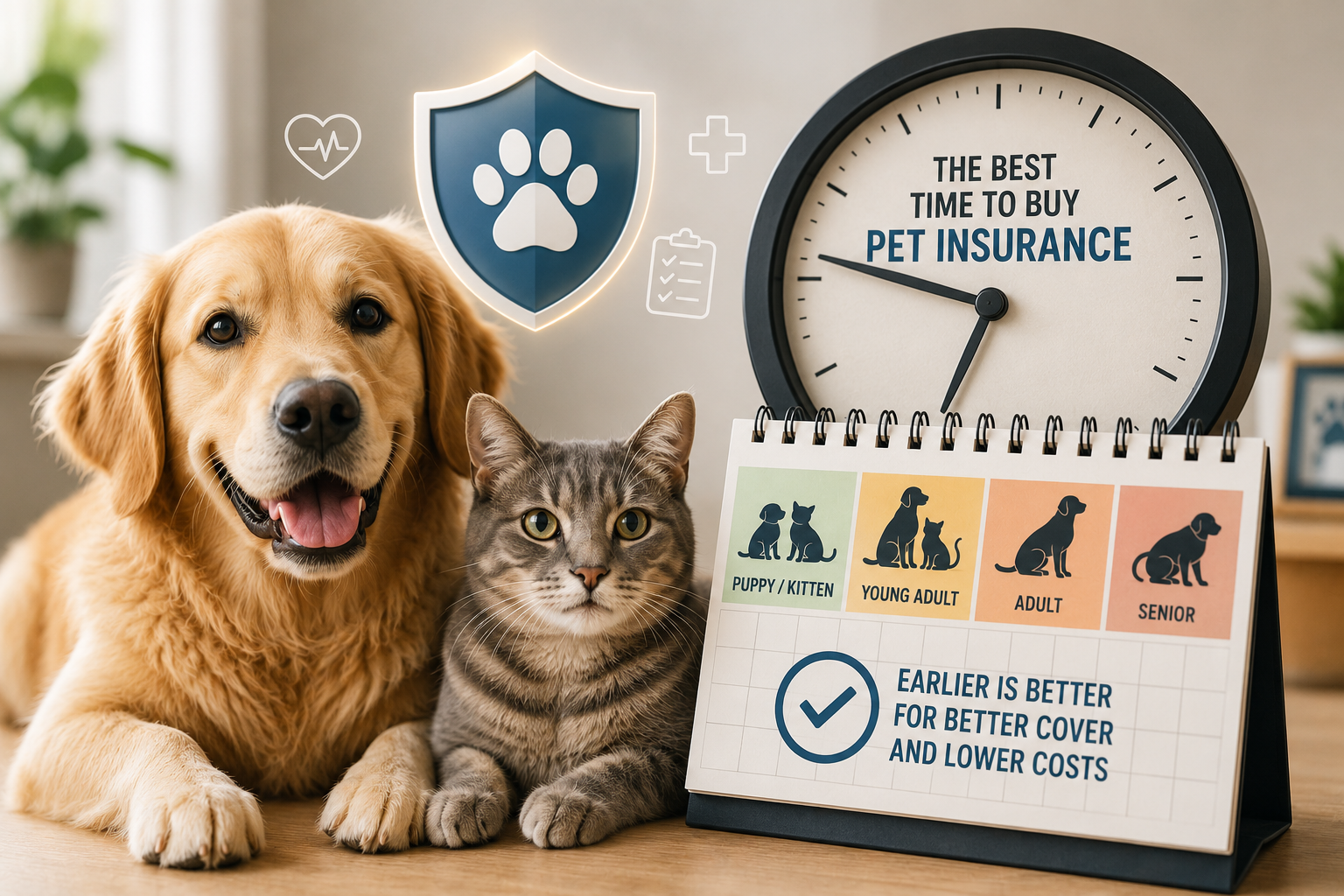
The ideal enrollment window is the moment you bring a new pet home, or as close to it as possible, well before your first wellness visit reveals anything unexpected. For breeds prone to hereditary or developmental issues, this timing advantage compounds, since the orthopedic waiting period, the longest of the three categories, has the most time to fully clear before symptoms typically appear.
Breeds where early enrollment matters most
Large and giant breeds such as Labradors, Golden Retrievers, German Shepherds, and Great Danes, due to higher rates of hip dysplasia and cruciate ligament tears.
Brachycephalic breeds such as Bulldogs, Pugs, and French Bulldogs, due to higher rates of respiratory and skin conditions.
Senior pets adopted later in life, since age related conditions can develop quickly and a longer orthopedic wait leaves a wider exposure window.
Enrolling after symptoms already appeared. The most common reason a claim gets denied is that the condition was documented or visible before the waiting period or the policy start date.
Skipping the policy’s exact start time. Some insurers activate coverage at midnight following purchase rather than the moment of purchase, which can matter for accident claims that happen the same day.
Assuming all carriers use the same orthopedic wait. A 14 day wait at one carrier and a 6 month wait at another can be the difference between a covered and denied hip dysplasia claim for a growing puppy.
Not disclosing prior vet records. Hiding or forgetting a past symptom does not help, since insurers can request full veterinary history and will use it to evaluate pre-existing condition claims.
Switching carriers without checking for a coverage gap. Canceling one policy and waiting even a few days before starting a new one can reset every waiting period from zero.
Confusing wellness plans with insurance. New disclosure laws in several states now require insurers to separate wellness add-ons, like routine vaccines, from actual accident and illness insurance, since the two have very different waiting period and coverage rules.
For accidents, often yes. Carriers like Lemonade waive the accident wait in most states, and a growing number of states now ban accident waiting periods by law. For illness and orthopedic conditions, almost no major carrier offers a true zero day wait in 2026, so plan to enroll before symptoms appear instead.
Does my premium still get charged during the waiting period?
Yes. Your premium starts on the policy effective date regardless of whether claims are payable yet. You are paying to start the clock and lock in your pet’s current health status before any new condition could be classified as pre-existing.
What happens if my pet gets sick exactly on the last day of the waiting period?
Coverage typically activates at a specific time, often midnight, on the day the waiting period ends. If the illness or injury is diagnosed after that point, it should be covered like any other claim, subject to your deductible and reimbursement rate. Keep your paperwork and visit dates clear in case timing is questioned.
Are waiting periods the same for every pet on a multi-pet policy?
Generally yes, each pet’s coverage starts its own waiting period clock based on when that specific pet’s policy began, not when you first became a customer. Adding a new pet to an existing account still triggers a fresh waiting period for that animal.
Do new state laws apply to policies I already had before 2026?
This depends on your state and your renewal date. Many new disclosure and waiting period laws apply at the next renewal or to newly issued policies rather than retroactively rewriting existing contracts. Check your renewal notice or contact your state insurance department for specifics.
Is a longer waiting period always a sign of a worse policy?
Not necessarily. Some carriers use a longer orthopedic wait specifically because they offer broader coverage for hereditary conditions once that period clears, while a carrier with a shorter wait might exclude certain hereditary conditions altogether. Compare the full coverage terms, not just the wait length.
This article is for general educational purposes and reflects publicly available information on 2026 pet insurance regulations and carrier policies current as of mid 2026. It is not personalized insurance or veterinary advice. Waiting periods, coverage terms, and state regulations vary by provider, policy, and location, so always confirm specifics directly with your insurer and read your policy schedule before enrolling.