Every pet parent knows the unspoken contract we sign the day we bring a furry family member home: we promise to love them, feed them, and do whatever it takes to keep them safe. But in 2026, the financial reality of that last promise is shifting beneath our feet.
If you have stepped into a veterinary clinic recently, you have likely experienced sticker shock. Vet care is no longer just about annual shots and the occasional ear infection treatment. It has evolved into a highly sophisticated world of veterinary oncology, 3D printing for orthopedic fractures, and advanced MRI diagnostics.
With human-grade medicine comes human-grade pricing. As household budgets face constant pressure, a critical question arises for millions of dog and cat owners: Is pet insurance worth it in 2026, or are you better off just opening a high-yield savings account?
To help you cut through the marketing noise, this article delivers an exhaustive, data-driven cost-benefit analysis of pet insurance in 2026. We will examine current industry data, real-world claim math, hidden policy landmines, and a direct comparison of insurance versus self-funding.
The 2026 Pet Care Crisis: Why Vet Bills Are Skyrocketing
To understand if pet insurance is worth the monthly premium, we have to look closely at what is happening inside animal hospitals across the United States.
The economics of animal healthcare have fundamentally shifted over the last few years. According to a comprehensive 2026 pet health report published by the Los Angeles Times, cumulative veterinary care inflation reached an astonishing 44 percent since 2019, completely outstripping the general U.S. inflation rate of 26 percent over the same window.
This price surge is driven by a perfect storm of economic and structural factors:
Advanced Medical Capabilities: General practitioners routinely refer patients to board-certified veterinary specialists. Treatments like chemotherapy, pacemaker implantations, and complex spinal surgeries are now standard offerings.
The Veterinary Labor Shortage: A severe, ongoing shortage of credentialed veterinary technicians and emergency veterinarians has forced practices to radically increase wages to retain staff, driving up standard operational fees.
Corporate Consolidation: Private equity firms and massive corporations continue to acquire independent veterinary practices. Corporate ownership groups often implement centralized, rigid pricing structures that maximize revenue per patient visit.
The financial strain on households is severe. Industry surveys indicate that nearly 67 percent of pet owners state they could not cover a sudden $5,000 emergency veterinary bill without taking on high-interest credit card debt. As a result, an estimated 75 million pets are missing out on timely care because their owners face immense financial barriers.
How Pet Insurance Works in 2026
Before we analyze the math, it is vital to understand that pet insurance does not operate like human health insurance. There are no copays at the front desk, and you cannot simply flash an insurance card to walk out without paying.
Instead, pet insurance functions on a reimbursement model:
Pay the Vet: You pay the veterinary hospital directly at the time of discharge using cash, a debit card, credit cards, or financing options like CareCredit.
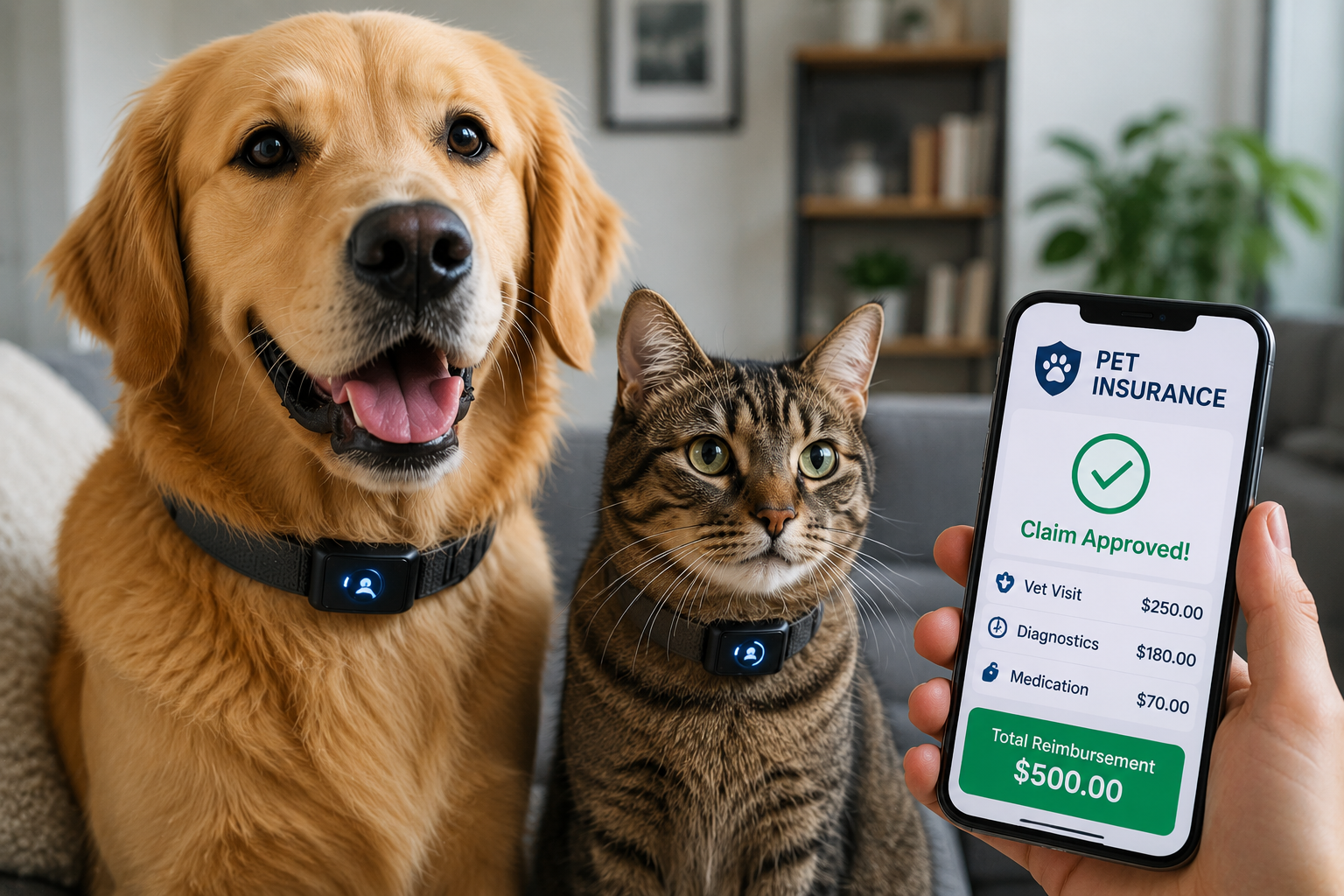
Submit the Claim: You upload an itemized invoice and your pet’s medical chart history through your insurer’s mobile app.
Get Reimbursed: The insurance company processes the claim and sends you a direct deposit or check for their share of the covered expenses.
Your monthly premiums and out-of-pocket costs are governed by three variables that you can customize when building a policy:
The Deductible: The amount you must pay out-of-pocket before your insurance kicks in. This typically ranges from $100 to $1,000 annually. Most modern 2026 policies use an annual deductible rather than a per-incident deductible.
The Reimbursement Percentage: The portion of the remaining bill the insurance company agrees to pay. Standard choices are 70%, 80%, or 90%. A few niche providers still offer 100% options for a significantly higher premium.
The Annual Limit: The maximum cap on what the insurer will pay out in a single policy year. Options scale from a restrictive $2,500 cap up to completely Unlimited plans.
Calculating the Raw Math: Two Real-World Scenarios
Let’s look past the marketing brochures and run the numbers on two typical pet scenarios over a multi-year timeline.
Scenario A: Max the Golden Retriever (The Catastrophic Event)
Max is a healthy Golden Retriever enrolled in an Accident & Illness policy at 12 weeks old. His owners pay an average premium of $55 per month ($660 per year). Their policy is configured with a $250 annual deductible, an 80% reimbursement rate, and a $10,000 annual cap.
Years 1 to 4: Max is vibrant and healthy. He only goes in for routine checkups (not covered by the baseline policy).
Total Premiums Paid: $2,640
Year 5: Max tears his cranial cruciate ligament (CCL)—the dog equivalent of an ACL tear—while chasing a ball. He requires specialized TPLO surgery, follow-up physical rehabilitation, and long-term anti-inflammatory medications.
Total Veterinary Bill: $6,000
Here is how the insurance reimbursement handles Max’s $6,000 orthopedic bill:
Bill Subject to Reimbursement=$6,000−$250 (Deductible)=$5,750
Insurance Reimbursement Amount=$5,750×0.80=$4,600
Owner’s Final Out-of-Pocket Cost=$6,000−$4,600=$1,400
The Financial Verdict for Max: Over five years, the owners paid $3,290 in cumulative premiums ($2,640 + $650 for Year 5). They received $4,600 back in a single claim payout. The policy saved them $1,310 net, while entirely mitigating the stress of finding $6,000 upfront.
Scenario B: Bella the Domestic Shorthair (The Blessed Life)
Bella is an indoor cat insured from kittenhood at a highly competitive rate of $25 per month ($300 per year) with an 80% reimbursement rate and a $250 deductible. Bella lives a beautifully uneventful, indoor life.
Years 1 to 10: Bella has zero accidents and zero chronic illnesses. Her only veterinary visits are for annual vaccines, wellness exams, and routine dental cleanings.
Total Premiums Paid: $3,000
Year 11: Bella develops a minor skin infection that requires diagnostics and antibiotics.
Total Veterinary Bill: $450
Here is how the reimbursement calculation looks for Bella’s skin treatment:
Bill Subject to Reimbursement=$450−$250 (Deductible)=$200
Insurance Reimbursement Amount=$200×0.80=$160
The Financial Verdict for Bella: Over 11 years, the owner paid $3,300 in premiums and collected a modest $160 reimbursement. From a purely mathematical standpoint, the owner lost over $3,140 by purchasing insurance.
Industry Statistics: What the Data Shows
From a purely actuarial standpoint, pet insurance companies are profitable businesses. This means that for the majority of pet owners, total lifetime premiums paid will naturally exceed total lifetime claim payouts.
Independent analysis from organizations like Consumer Reports consistently confirms that roughly 34% of policyholders save more money than they spend on premiums.
However, looking strictly at consumer data reveals an interesting paradox:
A landmark national data study from the pet insurance marketplacePawlicy Advisorreveals that despite the statistical likelihood of paying more than you receive, 9 out of 10 veterinary professionals state that pet insurance radically reduces client anxiety, and nearly 67% of covered pet owners report that their policy was absolutely worth the expense.
Why the high satisfaction rate if the math doesn’t always guarantee a profit? Because pet insurance isn’t an investment strategy; it is a risk mitigation tool. You are paying a predictable monthly fee to protect yourself against a catastrophic, low-probability financial event.
The Hidden Trap: Pre-Existing Conditions and Waiting Periods
If you decide to purchase coverage, you must understand the rules surrounding pre-existing conditions. This is the single biggest source of consumer anger and denied claims in the industry.
By law, no pet insurance company in the United States covers pre-existing conditions.
If your dog has a noted history of allergies, limping, or vomiting in their medical chart before you sign up for insurance—or during the policy’s initial waiting period (usually 14 days for illnesses)—that condition and any related downstream complications are excluded from coverage for life.
Curable vs. Incurable Conditions
Some modern providers in 2026 draw a line between curable and incurable issues:
Incurable Conditions: Diseases like diabetes, chronic kidney disease, or hip dysplasia can never be covered if they appear before the policy start date.
Curable Conditions: Acute problems like an isolated ear infection, urinary tract infection (UTI), or a minor bout of giardia may be reinstated into coverage if your pet remains completely free of symptoms and treatments for a set duration (typically 12 to 24 months, depending on the carrier).
Pet Insurance vs. High-Yield Savings Account (HYSA)
The most popular alternative to pet insurance is “self-insuring”—taking the $50 a month you would have paid to an insurance company and depositing it directly into a dedicated savings account.
Let’s look at how these two approaches compare when a major crisis hits.
Feature
Pet Insurance Policy
Self-Insured Emergency Fund
Availability of Funds
Instantly active for major limits (e.g., $10,000+) once waiting periods clear.
Grows slowly over time. ($50/month = $600 after one full year).
Financial Best Case
You lose your premium money if your pet stays healthy for life.
You keep 100% of your money plus accrued interest if your pet stays healthy.
Financial Worst Case
You are responsible for your deductible and a 10% to 30% copay during an emergency.
The account runs dry mid-treatment, forcing you to use credit cards or make a hard choice.
Exclusions & Rules
Highly strict rules regarding pre-existing conditions and breed exclusions.
Zero exclusions. You can spend the money on dental, wellness, or alternative care.
The Critical Flaw of the Savings Account
Self-insuring works perfectly if your pet experiences a medical emergency in the later stages of life. If you save $50 a month for 10 years, you will have $6,000 plus interest sitting securely in your account.
But what happens if your 8-month-old puppy swallows a stray sock or a chew toy? A foreign body obstruction surgery costs between $3,500 and $5,000. If you have only been saving for five months, your high-yield savings account will contain just $250. You are left completely unprotected when facing a massive financial gap.
Breeds That Require Insurance the Most
Because of genetic predispositions and selective breeding histories, certain dog and cat breeds are statistically high-risk patients. If you own or plan to adopt any of the following breeds, pet insurance moves from a “nice-to-have” option to an absolute necessity.
1. Brachycephalic (Flat-Faced) Breeds
Examples: French Bulldogs, English Bulldogs, Pugs, Boston Terriers.
The Risk: These breeds are prone to Brachycephalic Obstructive Airway Syndrome (BOAS). Corrective airway surgery to widen nostrils and shorten an elongated soft palate routinely costs between $3,000 and $7,000. They are also highly susceptible to spinal issues, like Intervertebral Disc Disease (IVDD), which can lead to emergency neurological surgeries costing upwards of $10,000.
2. Large and Giant Dog Breeds
Examples: Great Danes, German Shepherds, Golden Retrievers, Labrador Retrievers, Rottweilers.
The Risk: Large breeds face exceptionally high rates of hip and elbow dysplasia, severe cruciate ligament tears (CCL), and Gastric Dilatation-Volvulus (GDV), commonly known as bloat. Emergency bloat surgery to untwist a dog’s stomach is a life-or-death scenario that routinely runs $4,000 to $8,000.
3. Pedigree Cat Breeds
Examples: Maine Coons, Persians, Bengals, Ragdolls.
The Risk: Maine Coons and Ragdolls carry a prominent genetic marker for Hypertrophic Cardiomyopathy (HCM), a serious condition that causes thickening of the heart muscle. Managing feline heart disease requires ongoing veterinary cardiologist consultations, regular echocardiograms, and daily medications that accumulate thousands of dollars in costs over time.
How to Optimize Your Policy to Lower Premium Costs
If you want peace of mind but are struggling to justify high monthly quotes, you don’t have to walk away entirely. You can dramatically lower your premium payments by strategically adjusting your policy sliders:
Choose a Higher Deductible: Moving your annual deductible from $250 to $500 or $1,000 can slash your monthly premium by up to 30% to 40%. This transforms your policy into a true “catastrophic-only” safety net.
Drop Your Reimbursement Rate: Selecting an 70% reimbursement rate instead of a 90% rate lowers your premium considerably. You will pay a bit more during a claim, but your fixed monthly overhead will drop.
Skip the Wellness Add-Ons: Wellness and preventative care riders (which cover routine items like vaccines, spaying, and flea prevention) are rarely cost-effective. Insurance companies calculate exactly what those services cost and bake them directly into the add-on price. You are usually better off paying for routine preventative care out of pocket.
Look for Multi-Pet Discounts: If you are insuring more than one animal, look for providers like Spot, Pumpkin, or Lemonade, which offer stackable 5% to 10% multi-pet discounts.
Final Verdict: Is It Worth It in 2026?
Ultimately, determining whether pet insurance is worth it depends on how you answer this fundamental question: How would your household handle a sudden, unexpected $5,000 veterinary bill tomorrow?
Pet insurance is absolutely worth it if: You do not have thousands of dollars in liquid savings readily available, or you know that you would experience intense anxiety if you had to balance your pet’s life against your financial survival. It acts as an emotional safety net, ensuring you can always say “yes” to life-saving clinical care.
Pet insurance is NOT worth it if: You are highly disciplined, have substantial emergency savings (e.g., $10,000+ set aside specifically for emergencies), own a resilient mixed-breed animal with low genetic risks, and are comfortable self-funding any health issues that may emerge over time.