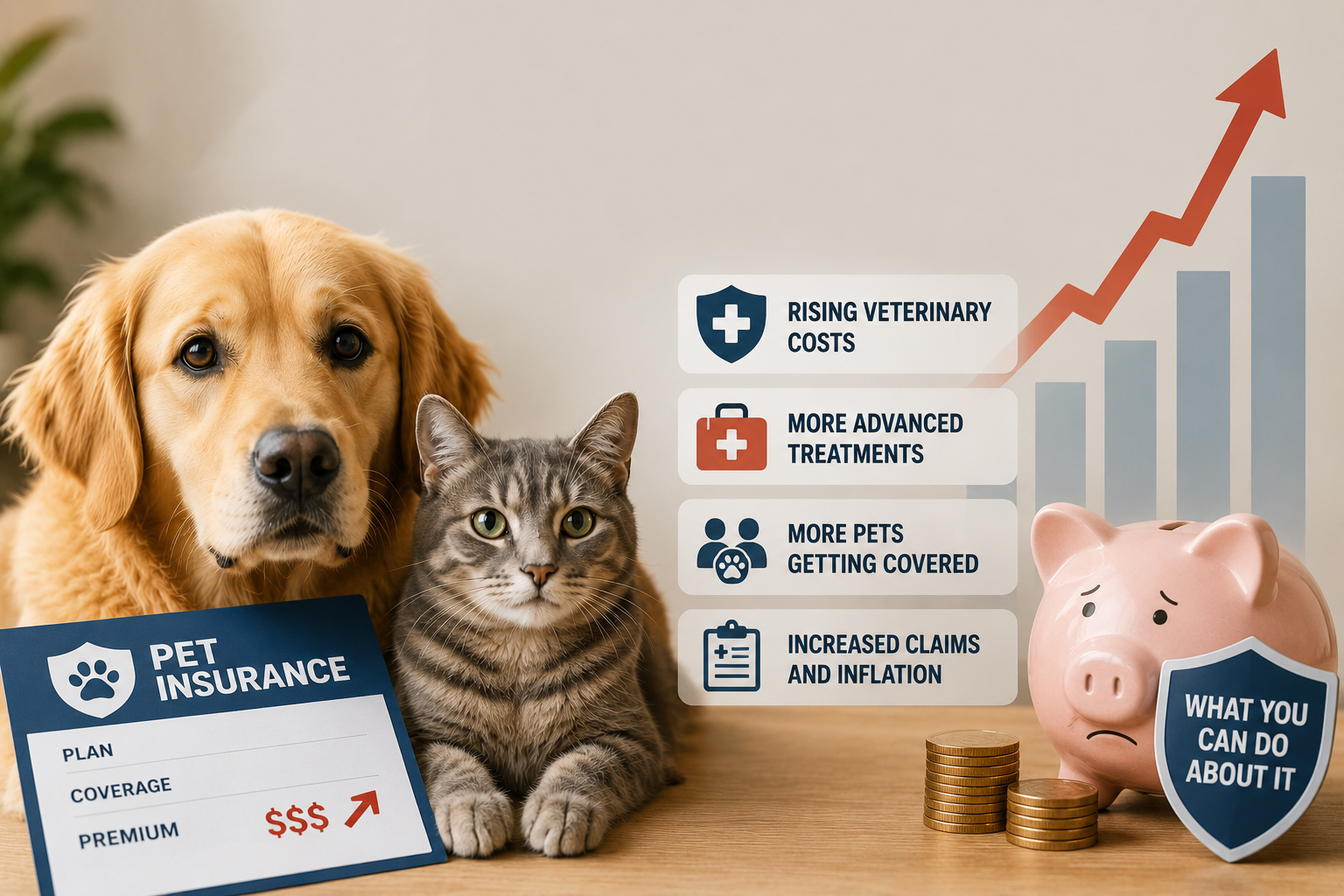
Bringing home a pet introduces incredible joy along with significant long-term financial obligations. Modern veterinary medicine offers stellar treatment options, including advanced oncology, intricate orthopedic procedures, and specialized emergency interventions. However, these advanced healthcare options come with escalating costs. A sudden emergency room visit or a chronic health diagnosis can easily result in thousands of dollars in medical bills.
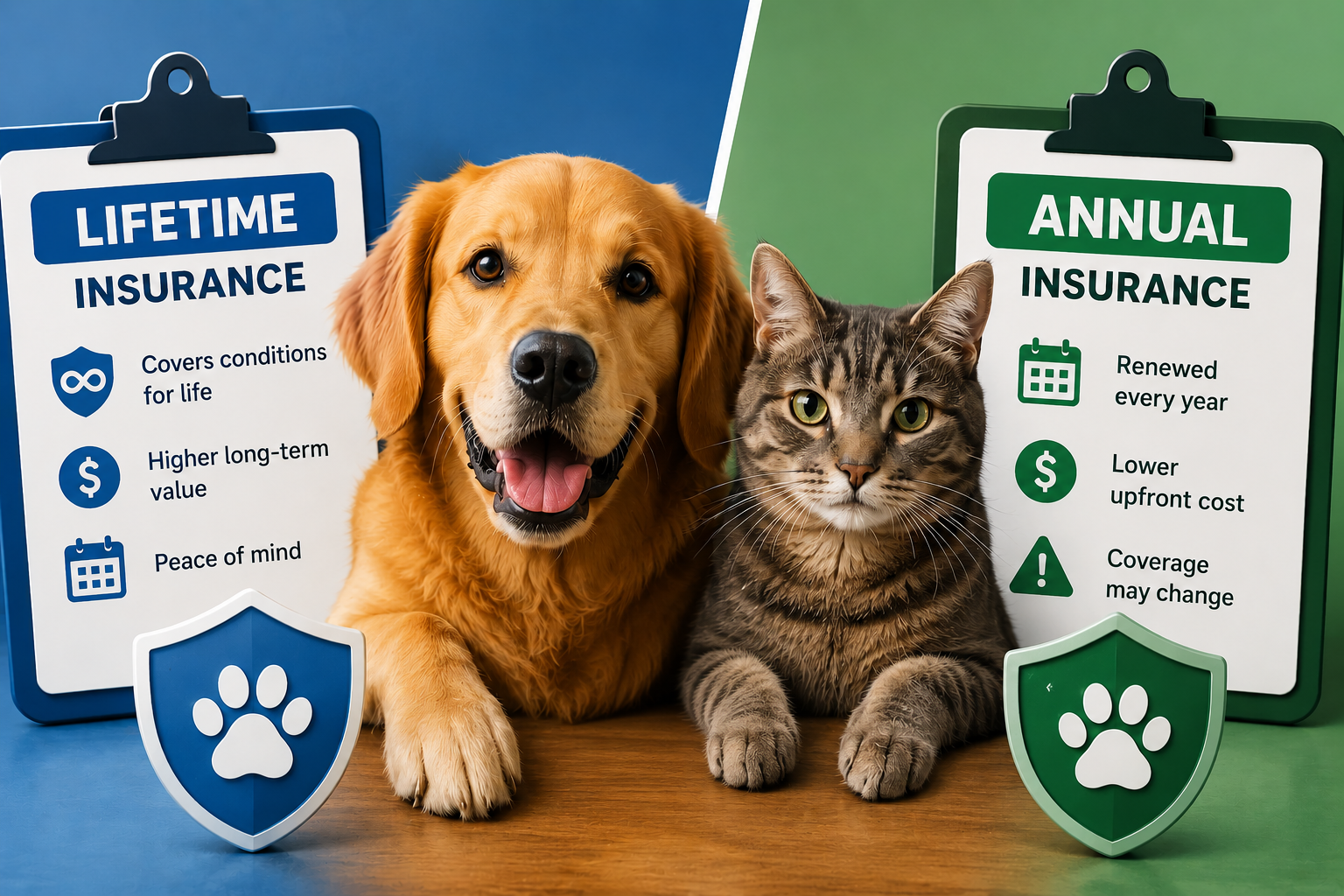
Pet insurance serves as an essential financial safety net, helping pet parents manage these sudden expenses. When choosing a plan, pet parents must evaluate the foundational structure of the policy. The primary choice generally centers on two main formats: Lifetime Pet Insurance and Annual (or Time-Limited) Pet Insurance.
Selecting the wrong plan structure can lead to unexpected coverage gaps down the road, especially if your pet develops a chronic condition. This comprehensive guide breaks down the structural differences, long-term costs, and specific advantages of each policy type to help you make an informed decision for your companion.
Core Operational Definitions
To evaluate these insurance types, it is important to first understand how providers define policy durations and claim limits.
What is Lifetime Pet Insurance?
A Lifetime pet insurance policy provides a continuous baseline of coverage that resets its financial limits at the start of each new policy year. If your cat or dog develops a chronic condition like diabetes, allergies, or arthritis, that condition remains covered for the entirety of the animal’s life, provided you maintain continuous coverage and pay your premiums on time.
The defining attribute of a lifetime policy is the annual reset. If your policy provides up to $10,000 in veterinary fee coverage per year, you can spend up to that cap on your pet’s healthcare during that 12-month window. When the policy renews, the financial pool refills completely, allowing you to claim for those same ongoing issues over the following year.
What is Annual (Time-Limited) Pet Insurance?
An Annual or Time-Limited pet insurance policy applies strict constraints to either the total payout amount, the duration of coverage per illness, or both. These policies typically provide coverage for a specific illness or injury for a standard 12-month window starting from the initial date of diagnosis or clinical signs.
Once that 12-month period expires, or once the allocated financial cap for that specific condition is reached, that specific health issue is permanently excluded from future coverage. The condition is then categorized as a pre-existing condition, meaning you will be responsible for all future treatment costs out of pocket.
Actuarial Policy Comparison
Lifetime vs. Annual Cost Simulator
Simulate your total expected out-of-pocket costs across a 5-year timeline to uncover hidden pre-existing exclusions.
1. Baseline Premium Setup
Annual premium base tracks lower by standard market ratios.
2. Clinical Risk Variables
Simulate Chronic ConditionsAdds ongoing treatment expenses (e.g., Allergies, Diabetes, or Arthritis treatments at \$1,800 annually).
3. 5-Year Cumulative Cost Projections
Lifetime Policy Total
\$3,166
Covers premiums + age increases. Chronic illness fully protected.
Annual Policy Total
\$1,759
Covers premiums + age increases. Lower up-front risk.
Actuarial Outlook: Select the chronic conditions simulator toggle to evaluate how long-term pre-existing exclusions shift lifetime value curves.
Structural Comparison
The fundamental distinction between these two options lies in how they handle long-term financial risk and chronic conditions. The table below details how each policy type manages claims, caps, and renewals over time.
Coverage Feature
Lifetime Pet Insurance Policy
Annual / Time-Limited Policy
Financial Cap Reset
Financial caps reset fully every 12 months at renewal.
Caps do not reset; limits apply per condition or per time frame.
Chronic Condition Coverage
Covered for life under continuous policy renewals.
Excluded after the financial cap or 12-month window closes.
Pre-Existing Classification
Conditions stay covered if they develop during active policy years.
Ongoing conditions become pre-existing exclusions at year-end.
Premium Cost Trajectory
Typically higher initial premiums that increase with age.
Lower initial premiums, but value decreases for aging pets.
Ideal For
Puppies, kittens, and breeds prone to chronic hereditary issues.
Understanding how your policy handles claims across multiple years is critical to avoiding unexpected out-of-pocket costs.
The Lifetime Policy Trajectory
Consider a scenario where a golden retriever is enrolled in a lifetime policy with a $7,500 annual limit. At age three, the dog is diagnosed with severe bilateral hip dysplasia.
During that first year, advanced physical therapy, specialist consultations, and pain management medications total $5,000. Because this falls below the $7,500 cap, the insurance provider reimburses the owner based on their chosen reimbursement percentage.
At the start of the next policy year, the available pool resets back to $7,500. The hip dysplasia remains a covered condition, ensuring that ongoing physical therapy or future joint replacement surgeries continue to receive coverage.
The Annual Policy Trajectory
Now consider the same golden retriever covered under an annual time-limited policy with a $7,500 limit per condition. When the hip dysplasia is diagnosed, the clock begins ticking.
The policy will cover treatment for that specific condition for exactly 12 months from the onset of symptoms, up to the $7,500 cap.
Once those 12 months pass, the condition is formally excluded from the policy. Even if you spent only $3,000 of the $7,500 limit during that year, the remaining $4,500 is forfeited for that condition. Moving forward, all prescriptions, diagnostic imaging, and veterinary exams related to hip dysplasia must be paid entirely out of pocket by the owner.
Long-Term Premium and Cost Analysis
When comparing insurance options, you must weigh the immediate cost of premiums against the potential long-term expenses of veterinary care.
Upfront Premium Differences
Annual policies feature lower monthly premiums because the insurance provider assumes significantly less long-term financial risk. By capping coverage for chronic illnesses at 12 months, the insurer protects itself from years of ongoing payouts.
Lifetime policies carry higher initial monthly premiums because the provider assumes the long-term risk of managing chronic conditions across the pet’s entire lifespan.
Premium Increases and Aging
For both policy types, premiums generally increase as your pet ages. As pets grow older, the statistical likelihood of illness and injury rises sharply.
With a lifetime policy, your premium increases will reflect both the animal’s aging bracket and any general increases in veterinary care costs.
With an annual policy, you may see lower premium hikes initially, but the overall value of the plan drops as your aging pet develops illnesses that become excluded from future coverage year after year.
The Pre-Existing Condition Lock-In
The most critical financial risk of pet insurance involves changing providers or policies later in your pet’s life. Unlike human health insurance, pet insurance platforms do not carry regulatory mandates to cover pre-existing conditions. Any illness or injury noted in your pet’s medical records prior to enrollment or during a policy waiting period is permanently excluded from a new plan.
If you enroll a young pet in an annual policy to save on premiums, and that pet develops a condition like allergies or epilepsy, you face a challenging financial crossroad at the end of the policy year:
Stay with the current annual policy: The condition becomes excluded, and you must pay for all ongoing treatments out of pocket.
Switch to a lifetime policy with a new provider: The new provider will review your pet’s veterinary history, identify the illness as a pre-existing condition, and exclude it from coverage immediately.
This dynamic effectively locks your pet into their current coverage status, underscoring why choosing the appropriate policy structure early on is so important.
Strategic Policy Matching
The decision between lifetime and annual coverage should align with your pet’s specific breed profile, age, and your personal financial preferences.
When Lifetime Coverage is Most Beneficial
Lifetime coverage is often the most secure choice for pet parents who prioritize long-term predictability. It is highly recommended for:
Young Pets: Enrolling puppies and kittens before any health issues appear ensures that any chronic conditions that develop later in life will be covered.
Breeds Prone to Hereditary Conditions: Certain breeds have higher genetic predispositions to ongoing health issues. For example, German Shepherds are prone to hip issues, French Bulldogs frequently face respiratory complications, and Cavalier King Charles Spaniels have a higher incidence of cardiac conditions.
Managing Multi-Year Financial Risks: If you want peace of mind knowing that long-term conditions like cancer, diabetes, or skin allergies will have a dedicated, resetting pool of funds year after year, lifetime coverage provides that security.
When Annual Coverage is a Practical Alternative
While lifetime coverage offers the most comprehensive protection, an annual or time-limited policy can be a logical, budget-conscious choice under specific circumstances:
Strict Monthly Budget Constraints: If a lifetime policy’s premium stretches your finances too thin, an annual policy provides a baseline safety net for accidents and acute injuries at a lower monthly cost.
Adopting Older Pets with Clear Histories: For an older pet with an established medical history free of chronic issues, an annual policy can provide affordable short-term protection against sudden acute events, like accidental poisonings, lacerations, or foreign object ingestions.
Short-Term Transition Coverage: If you need interim financial protection while building a dedicated emergency savings fund, an annual policy offers an affordable bridge.
Critical Policy Checklist
Before finalized a pet insurance policy, review these key contract details to ensure you understand your coverage limits:
Financial Cap Resets: Confirm whether the annual limit resets fully upon renewal without placing secondary limits on specific conditions.
Bilateral Condition Exclusions: Read the fine print regarding bilateral conditions, which are issues that can occur on both sides of the body, such as cruciate ligament tears or hip dysplasia. Some providers classify a second tear as part of the initial claim, which can exhaust your limit quickly on an annual plan.
Waiting Periods: Review the designated waiting periods for accidents and illnesses. Any symptoms that appear during these initial days will be classified as pre-existing conditions.
Deductible Frameworks: Determine if your deductible is annual (paid once per policy year) or per-condition (paid once for every unique medical issue). This framework interacts directly with your policy type to dictate your out-of-pocket costs.
Choosing between lifetime and annual pet insurance requires balancing immediate premium costs against long-term financial security. For most pet parents, the resetting limits and chronic condition coverage of a lifetime policy offer the most dependable protection against escalating veterinary costs. However, analyzing your pet’s breed risks, age, and your household budget will point you toward the strategy that best safeguards both your companion’s health and your financial peace of mind.